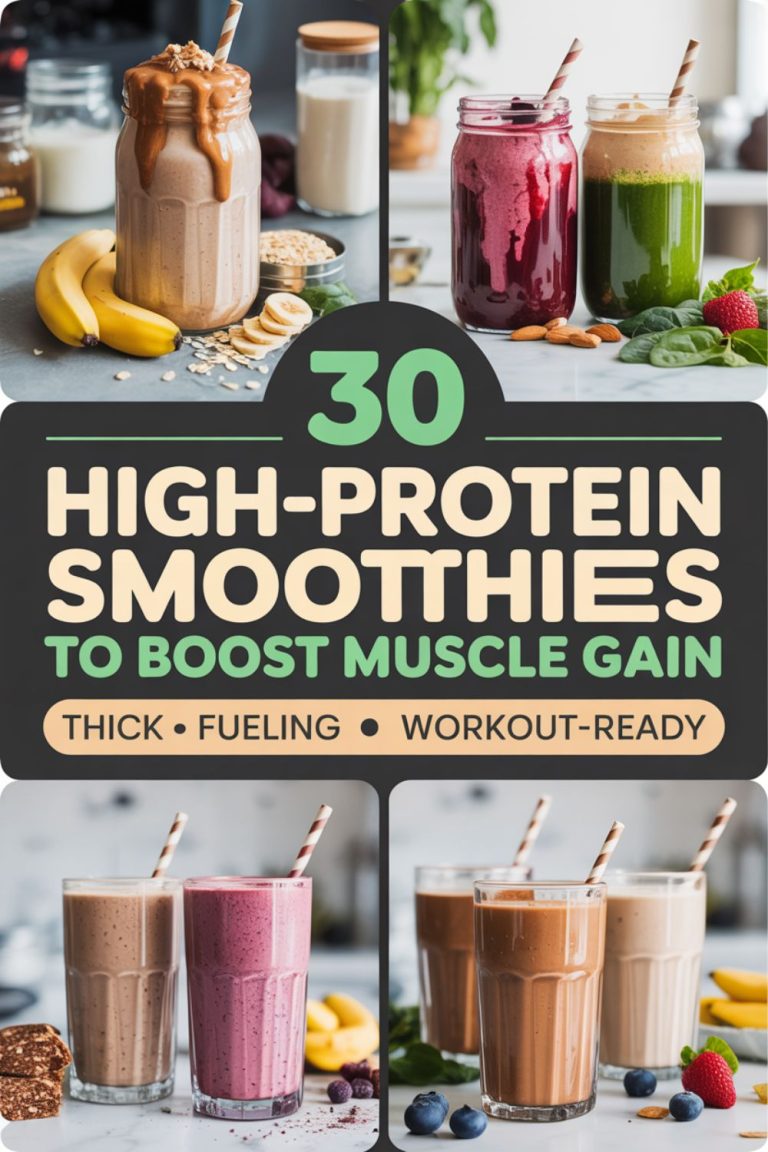
22 High-Protein Smoothies for Muscle Gain
You know what’s weird? People spend hours researching the perfect workout split and tracking their macros down to the gram, but when it comes to actually getting those macros in, they’re stuck chugging chalky protein shakes that taste like sadness mixed with artificial vanilla. I’ve been there, standing in my kitchen at 6 AM, trying to convince myself that this grainy mess is worth it.
Here’s the thing: building muscle doesn’t mean you have to torture your taste buds. Smoothies can actually taste good while packing enough protein to support your gains. I’m talking 25-40 grams of protein per serving, with real ingredients that don’t make you question your life choices.
I’ve spent years experimenting with protein smoothies—some epic wins, plenty of disasters (nobody needs to relive my cottage cheese chocolate disaster of 2019). These 22 smoothies are the ones that actually made the cut. They taste good, they blend smooth, and they’ll help you hit your protein goals without feeling like a chore.
Why Protein Smoothies Actually Work for Muscle Gain
Look, I’m not going to pretend that drinking smoothies alone will turn you into Arnold Schwarzenegger. But they’re legitimately useful when you’re trying to build muscle.
First, they’re convenient. You can blend one up in two minutes and drink it on your way to the gym or right after your workout. No meal prep required, no cooking, no cleanup beyond rinsing a blender.
Second, they’re easy to digest. Your body absorbs liquid nutrients faster than solid food, which is clutch for post-workout recovery. Research shows that consuming protein within a couple hours after training can help maximize muscle protein synthesis—the process your body uses to repair and build muscle tissue.
Third, you can pack a ton of calories and protein into a single glass without feeling stuffed. Ever tried eating 500 calories of chicken breast? It’s a lot. But a 500-calorie smoothie? That’s easy to get down.
I use this high-speed blender because my old one left chunks of frozen fruit that felt like drinking gravel. Worth every penny for smooth, well-blended smoothies every time.
The Protein Smoothie Formula That Actually Works
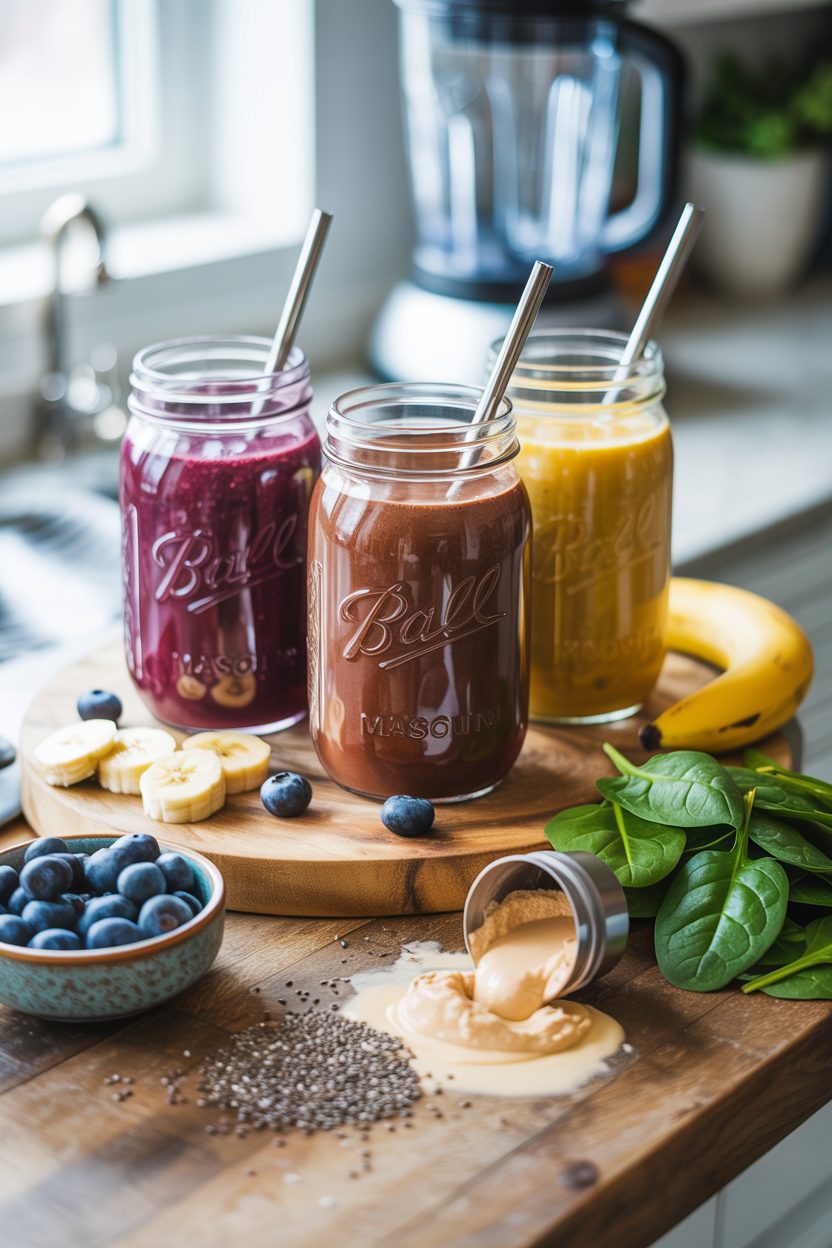
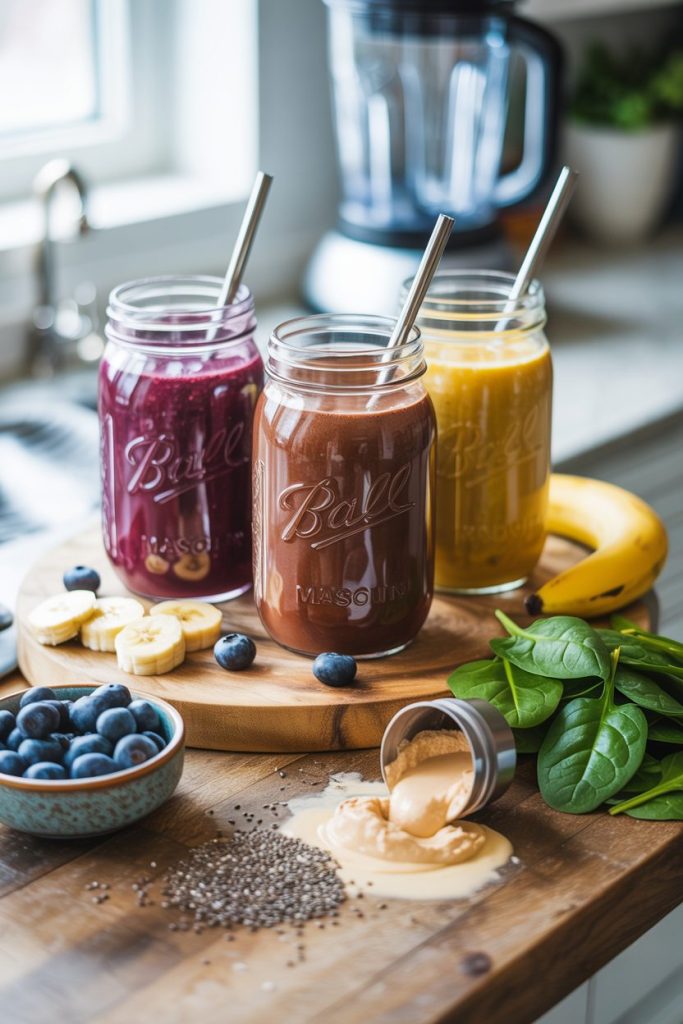
Before we get into the recipes, let’s talk about what makes a muscle-building smoothie actually work. You need four main components: protein, carbs, healthy fats, and liquid.
Protein sources (aim for 25-40g per smoothie):
- Protein powder (whey, casein, plant-based)
- Greek yogurt (20g per cup)
- Cottage cheese (14g per half cup)
- Silken tofu (10g per half cup)
- Egg whites (3.6g per large egg white)
Carb sources for energy and recovery:
- Banana, berries, mango, or other fruits
- Oats (adds thickness and staying power)
- Sweet potato (sounds weird, tastes amazing)
- Dates (natural sweetness plus fiber)
Healthy fats for hormone production and satiety:
- Nut butter (almond, peanut, cashew)
- Avocado (makes smoothies incredibly creamy)
- Chia seeds or flax seeds
- Coconut oil or MCT oil
Liquid base:
- Milk (dairy or plant-based)
- Water
- Coconut water
- Kefir
Mix and match these components and you’ll never get bored. Trust me, I’ve been making smoothies almost daily for three years and I’m still finding new combinations.
Classic Muscle-Building Smoothies
1. Chocolate Peanut Butter Powerhouse
This is the smoothie that got me hooked on making my own. It tastes like a Reese’s cup but with 35 grams of protein.
Blend chocolate protein powder, banana, natural peanut butter, milk, and ice. Add a tablespoon of cocoa powder if you want it extra chocolatey. The banana makes it naturally sweet without added sugar.
I prep smoothie bags with all the ingredients except liquid and freeze them. Morning me appreciates past me’s effort when I can just dump a bag in the blender and go.
2. Vanilla Berry Blast
Mix vanilla protein powder, mixed berries (frozen works great), Greek yogurt, milk, and a handful of spinach.
The spinach sounds scary but you literally cannot taste it. I promise. The berries overpower any green flavor and you get extra vitamins without trying. Each serving hits around 30 grams of protein and the antioxidants from berries help with recovery.
3. Banana Oat Cookie
Blend vanilla protein powder, banana, oats, cinnamon, Greek yogurt, and milk. Add a pinch of nutmeg if you’re feeling fancy.
This tastes like drinking oatmeal cookies but in the best way possible. The oats add texture and slow-digesting carbs that keep you full for hours. Around 32 grams of protein per serving.
4. Coffee Protein Shake
Cold brew coffee, chocolate or vanilla protein powder, banana, almond butter, and ice.
This is my morning go-to when I need caffeine and protein. It’s basically a protein-packed iced coffee that tastes way better than those bottled ones. Plus you save like five bucks compared to hitting up a coffee shop. This cold brew maker changed my morning routine completely.
5. Strawberry Cheesecake
Greek yogurt, strawberries, cream cheese (just a tablespoon), vanilla protein powder, and milk.
The cream cheese makes it taste like actual cheesecake. It’s ridiculous. Each serving has about 35 grams of protein and satisfies dessert cravings without derailing your goals.
If you’re looking for more protein-packed options beyond smoothies, check out these 30 high-protein breakfast ideas to stay full longer that pair perfectly with your muscle-building routine.
Fruit-Forward Smoothies That Pack Protein
6. Tropical Mango Madness
Blend mango chunks, pineapple, coconut milk, vanilla protein powder, and Greek yogurt.
This tastes like vacation in a glass. The combination of mango and pineapple with coconut milk is chef’s kiss. Around 28 grams of protein and enough tropical vibes to make you forget it’s Tuesday.
7. Blueberry Muffin
Blueberries, vanilla protein powder, oats, almond butter, cinnamon, Greek yogurt, and milk.
Seriously tastes like a blueberry muffin. The oats give it that bakery texture and the cinnamon ties everything together. About 30 grams of protein and way healthier than an actual muffin.
8. Apple Pie Protein
Diced apple, vanilla protein powder, oats, cinnamon, nutmeg, Greek yogurt, and milk. Add a couple ice cubes.
This one is a fall favorite but honestly I make it year-round. Tastes exactly like apple pie filling but you can drink it guilt-free. Hits around 32 grams of protein.
9. Peach Cobbler
Frozen peaches, vanilla protein powder, oats, cinnamon, cottage cheese, and milk.
Don’t knock the cottage cheese until you try it. It blends smooth and adds protein without any weird flavor. Each serving has about 35 grams of protein and tastes like dessert.
10. Cherry Vanilla Dream
Frozen cherries, vanilla protein powder, almond butter, Greek yogurt, and milk.
Cherries are underrated in smoothies. They’ve got natural anti-inflammatory compounds that help with muscle recovery. Plus this combination is just delicious. Around 30 grams of protein per serving.
Chocolate Lover’s Collection
11. Double Chocolate Brownie
Chocolate protein powder, cocoa powder, banana, almond butter, Greek yogurt, and milk.
This is dangerously good. Like, I’ve had to stop myself from making it twice in one day. Super rich, super chocolatey, and packs about 33 grams of protein. Add a handful of spinach if you want to sneak in some greens—you won’t taste them.
12. Mint Chocolate Chip
Chocolate protein powder, fresh mint leaves (or mint extract), banana, Greek yogurt, cacao nibs, and milk.
Fresh mint makes this taste way better than extract, but I get it—not everyone keeps fresh herbs around. A few drops of mint extract works fine. The cacao nibs add a nice crunch. Around 30 grams of protein.
13. Chocolate Hazelnut Heaven
Chocolate protein powder, Nutella (just a tablespoon), banana, Greek yogurt, and milk.
Yeah, Nutella isn’t exactly a health food, but a tablespoon won’t kill your macros and makes this taste incredible. You can swap for hazelnut butter if you want to keep it cleaner. About 32 grams of protein.
14. Chocolate Coconut Almond
Chocolate protein powder, coconut milk, almond butter, shredded coconut, Greek yogurt, and ice.
Tastes like an Almond Joy. The coconut and chocolate combination is classic for a reason. Each serving has around 30 grams of protein and healthy fats from the coconut and almond butter.
15. Mocha Madness
Cold brew coffee, chocolate protein powder, banana, cacao powder, Greek yogurt, and ice.
This is what I drink when I need both caffeine and protein. The coffee and chocolate combo never gets old. Around 33 grams of protein plus enough caffeine to make you feel human before your morning workout.
For more ways to fuel your muscle-building goals, these 21 high-protein meals for weight loss work great alongside a solid smoothie routine. And if you want a more structured approach, try this 14-day high-protein muscle gain meal plan that includes smoothie recommendations.
Green Smoothies That Don’t Taste Like Grass
16. Green Machine
Spinach, banana, mango, vanilla protein powder, Greek yogurt, and coconut water.
The mango completely masks the spinach taste. You’re getting greens without suffering through that earthy flavor. Around 28 grams of protein and a ton of vitamins.
17. Tropical Green
Kale, pineapple, banana, vanilla protein powder, coconut milk, and ice.
Kale is harder to hide than spinach flavor-wise, but pineapple is strong enough to do it. The natural enzymes in pineapple also help with digestion and reducing inflammation. About 30 grams of protein.
18. Green Protein Colada
Spinach, pineapple, coconut milk, vanilla protein powder, Greek yogurt, and ice.
This tastes like a piña colada. I make these in summer and pretend I’m somewhere tropical instead of sweating in my kitchen after leg day. Around 32 grams of protein.
19. Avocado Mint Protein
Avocado, fresh mint, banana, vanilla protein powder, Greek yogurt, and milk.
The avocado makes this insanely creamy without adding any avocado flavor. Seriously, it just makes the texture perfect. Each serving has about 33 grams of protein plus healthy fats.
Unique Flavor Combinations
20. Pumpkin Spice Protein
Pumpkin puree, vanilla protein powder, banana, pumpkin pie spice, Greek yogurt, and milk.
I make this year-round because it’s that good. Pumpkin is low calorie but adds great texture and nutrients. Around 30 grams of protein and tastes like fall.
21. Carrot Cake
Grated carrot, vanilla protein powder, oats, cinnamon, nutmeg, walnuts, Greek yogurt, and milk.
This sounds weird but trust me. The carrots blend smooth and taste amazing with the spices. This high-powered blender is clutch for getting vegetables completely smooth. About 32 grams of protein.
22. Almond Joy Protein
Chocolate protein powder, coconut milk, coconut flakes, almond butter, Greek yogurt, and ice.
Saved the best for last. This is my favorite smoothie, hands down. It tastes exactly like the candy bar but actually helps you build muscle instead of just spiking your blood sugar. Around 35 grams of protein.
Tips for Actually Making These Part of Your Routine
Let’s be real—these smoothies are useless if you don’t actually make them. Here’s what helps me stay consistent.
Prep smoothie packs on Sunday. Portion all the ingredients except liquid and protein powder into freezer bags. Label them. When you want a smoothie, dump the bag in the blender, add liquid and protein, blend.
Buy frozen fruit. It’s cheaper, lasts longer, and you don’t need ice. Plus it’s picked and frozen at peak ripeness, so the flavor is often better than fresh fruit that’s been sitting around.
Invest in a decent blender. I tried saving money with a cheap blender and ended up with chunks of frozen fruit that made drinking smoothies miserable. This blender handles everything—ice, frozen fruit, vegetables, everything blends smooth.
Drink them strategically. Post-workout is obvious, but I also use smoothies as meal replacements when I’m in a rush or as a bedtime snack with casein protein for overnight muscle recovery.
Don’t overthink it. You don’t need perfect ratios or exotic ingredients. Protein powder, fruit, Greek yogurt, liquid. That’s it. Everything else is extra.
Clean your blender immediately. Nothing worse than coming home to dried protein smoothie crusted all over your blender. Rinse it right after you pour your smoothie. Takes 30 seconds. Future you will be grateful.
Common Smoothie Mistakes That’ll Sabotage Your Gains
I’ve made all these mistakes so you don’t have to. Learn from my failures, people.
Using too much fruit. Yeah, fruit is healthy, but three bananas in one smoothie is excessive sugar that’ll spike your blood glucose. Stick to one serving of fruit per smoothie unless you’re intentionally loading carbs after a brutal workout.
Skimping on protein. If your smoothie has less than 20 grams of protein, it’s just a snack, not a muscle-building meal. Use enough protein powder or Greek yogurt to hit at least 25 grams.
Forgetting healthy fats. Protein and carbs are important, but fat helps with hormone production and nutrient absorption. Add nut butter, avocado, or seeds to every smoothie.
Not using enough liquid. Nobody wants to fight with their straw trying to suck up what’s basically pudding. Add enough liquid to make it drinkable. You can always add more—you can’t take it out once it’s in there.
Buying garbage protein powder. Not all protein powders are created equal. Some taste like chemicals, some don’t mix well, some have tons of added sugar. I use this whey protein because it actually tastes good and mixes smooth without getting clumpy.
Adding too many ingredients. More isn’t always better. When you throw ten different things in a blender, you end up with a muddy mess that doesn’t taste like anything specific. Stick to 4-6 ingredients max.
Not tracking macros. If you’re serious about building muscle, you need to know what you’re consuming. Use a food scale to measure ingredients until you get good at eyeballing portions. Smoothies are easy to underestimate calorie-wise.
How to Customize These for Your Goals
Not everyone has the same goals or dietary needs. Here’s how to adjust these smoothies based on what you’re trying to accomplish.
For cutting/fat loss: Use water or unsweetened almond milk instead of regular milk, skip the nut butter or use half the amount, use casein protein to stay full longer, add extra ice to increase volume without calories.
For bulking/mass gain: Use whole milk, add extra nut butter, throw in a handful of oats, use two scoops of protein powder instead of one, add honey or maple syrup for extra carbs.
For plant-based gains: Use plant protein powder (pea, rice, hemp blend), swap Greek yogurt for coconut yogurt or silken tofu, use plant milk, add hemp seeds for complete protein.
For lactose intolerance: Use lactose-free milk or plant milk, skip the Greek yogurt and use lactose-free cottage cheese or silken tofu, choose plant-based protein powder.
For keto/low-carb: Skip the fruit and banana, use berries sparingly (they’re lowest in carbs), add MCT oil or coconut oil, use almond or coconut milk, focus on protein and fat.
If you’re trying to balance muscle gain with fat loss, this 7-day high-protein low-carb meal plan gives you a solid framework for your overall nutrition strategy.
The Best Time to Drink Protein Smoothies
Timing isn’t as critical as people make it out to be, but there are better and worse times to drink your protein smoothie.
Post-workout is the most obvious. Your muscles are primed to absorb nutrients and start recovery. According to research on post-exercise nutrition, consuming protein within a couple hours after training can optimize muscle protein synthesis.
Morning works great if you struggle to eat solid food early or you’re rushing out the door. I blend a smoothie while I’m making coffee and drink it on my commute.
Between meals as a snack when you need extra protein but don’t want a full meal. This is clutch for hitting your daily protein target without forcing down another chicken breast.
Before bed using casein protein instead of whey. Casein digests slowly and feeds your muscles while you sleep. I make simpler smoothies for bedtime—usually just casein, banana, almond butter, and milk.
Pre-workout about 30-60 minutes before training if you need energy. Keep it lighter and easier to digest. Banana, protein powder, and almond milk is my go-to pre-workout smoothie.
Honestly though, the best time to drink a protein smoothie is whenever you’ll actually drink it. Consistency beats perfect timing every single time.
Related Recipes You’ll Love
Looking for more ways to support your muscle-building goals? Here are some solid options that work great alongside these smoothies:
Complete Meal Plans:
- 7-day high-protein meal plan with 1500 calories
- 30-day high-protein transformation plan
- 21-day high-protein meal prep challenge
More Protein Options:
- 25 high-protein snacks under 150 calories
- 21 high-protein lunches for busy workdays
- 25 high-protein dinners for fat loss
Final Thoughts
Here’s the deal: protein smoothies aren’t magic. They won’t build muscle by themselves. You still need to lift heavy, sleep enough, and stay consistent with your overall nutrition.
But they make hitting your protein goals way easier and way more enjoyable. Instead of choking down dry chicken breast or forcing yourself to eat when you’re not hungry, you can blend up something that actually tastes good and supports your gains.
Start with 2-3 recipes from this list that sound good to you. Make them a few times and see what you think. Adjust the ingredients to match your taste preferences. Some people like their smoothies thicker, some like them thinner. Some want them sweeter, others prefer less sweet. Make these recipes work for you.
The best smoothie is the one you’ll actually drink consistently. It doesn’t matter if it’s perfectly optimized if you hate drinking it and skip it half the time. Find what works, stick with it, and watch your progress improve.
Now stop reading and go blend something. Your muscles are waiting.