7-Day High-Protein Meal Plan for Women Over 40 – Downloadable
7-Day High-Protein Meal Plan for Women Over 40 – Downloadable
Let me guess—you’ve noticed that the same eating habits that worked in your 20s and 30s suddenly aren’t cutting it anymore. Your metabolism feels like it’s taken a permanent vacation, muscle seems harder to build (and way easier to lose), and every fitness influencer online is half your age talking about strategies that just don’t address what’s actually happening in your body right now.
I get it because I’ve lived it. Hitting 40 isn’t just about blowing out more candles—it’s about navigating real hormonal shifts, changing nutritional needs, and figuring out how to actually feel energized instead of just surviving on coffee and willpower. That’s exactly why I created this [7-day high-protein meal plan specifically designed for women over 40 – download your complete guide here].
This isn’t another generic meal plan that ignores the reality of perimenopause, slowing metabolism, and the very real challenge of maintaining muscle mass as estrogen levels shift. It’s a strategic, science-backed approach that works with your body, not against it.
Why Protein Becomes Non-Negotiable After 40
Here’s what nobody tells you when you’re younger: your body’s protein needs actually increase as you age, right when your appetite and metabolism might be decreasing. It’s like a cruel cosmic joke, honestly.
Starting around age 40, women experience something called sarcopenia—the gradual loss of muscle mass that accelerates without proper intervention. You can lose 3-5% of your muscle mass per decade after 30, and that rate speeds up after 50. Less muscle means slower metabolism, which means easier weight gain and harder weight loss.
But here’s the good news: [adequate protein intake can significantly slow or even reverse this process]. We’re talking about preserving your metabolism, maintaining strength, supporting bone density, and keeping your energy levels stable throughout the day.
According to research on protein requirements for aging women, women over 40 should aim for roughly 1.2 to 1.6 grams of protein per kilogram of body weight daily—significantly more than the standard recommendations. This meal plan is built around hitting those targets consistently without making you feel like you’re force-feeding yourself chicken breasts all day.
What Makes This Plan Different for Your Stage of Life
I’ve tried every meal plan under the sun, and most completely ignore the specific challenges women over 40 face. They don’t account for fluctuating energy levels, changing hormone patterns, increased inflammation, or the fact that you might be juggling career demands, family responsibilities, and trying to maintain some semblance of a social life.
This 7-day plan addresses all of it:
- Hormone-supportive foods that help balance estrogen and reduce hot flashes
- Anti-inflammatory ingredients that ease joint discomfort and support recovery
- Calcium and vitamin D-rich meals for bone health (because osteoporosis prevention starts now)
- Blood sugar-stabilizing combinations to prevent energy crashes and cravings
- Realistic portions that satisfy without leaving you uncomfortably full
Everything is designed to fit into a real, busy life. No elaborate recipes requiring 15 ingredients you’ll use once. No meal prep sessions that consume your entire Sunday. Just straightforward, delicious food that makes you feel amazing.
[Download the complete 7-day meal plan with shopping lists and prep guides] and see exactly how manageable high-protein eating can be, even with a packed schedule.
Day 1-2: Easing Into Your New Normal
The first two days focus on familiar flavors and textures while naturally increasing your protein intake. You’re not diving into anything weird or uncomfortable—just optimized versions of meals you already enjoy.
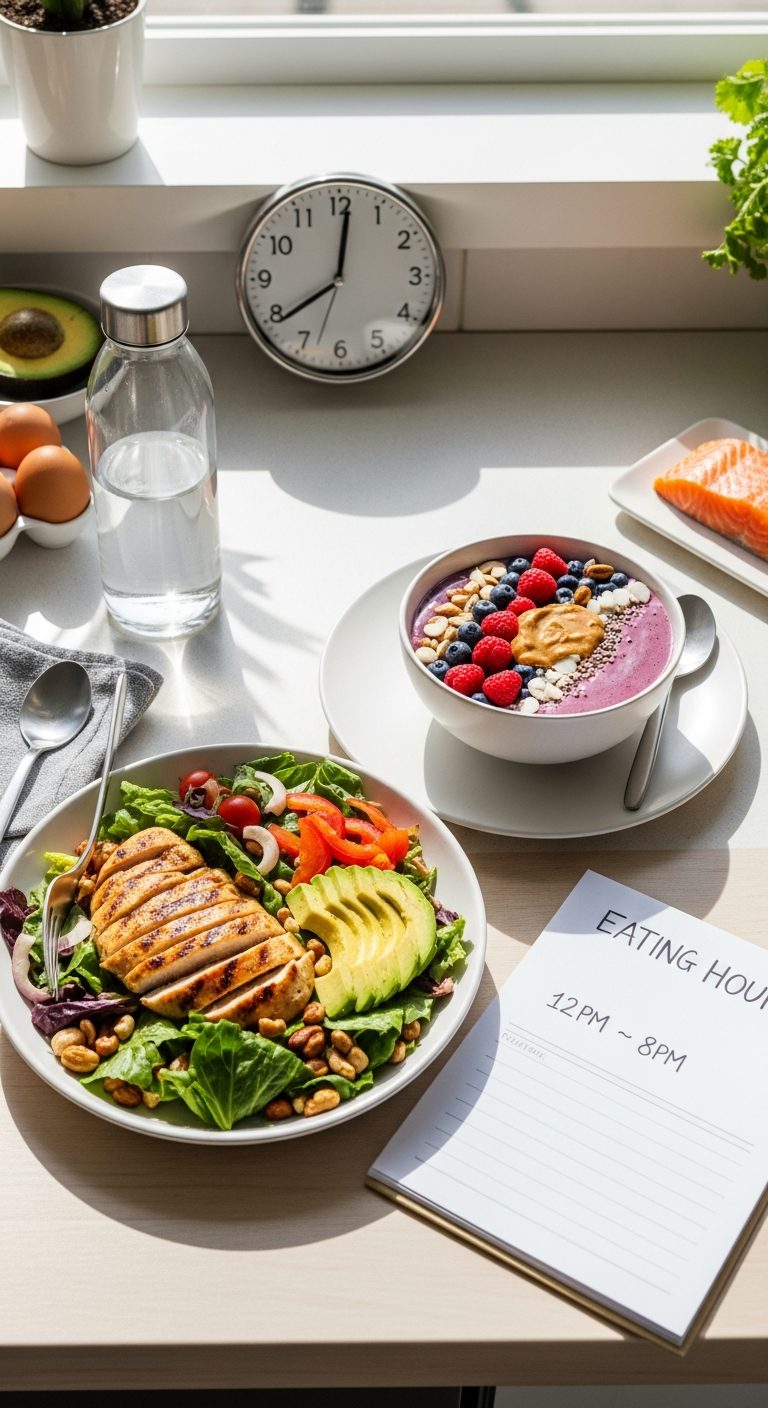
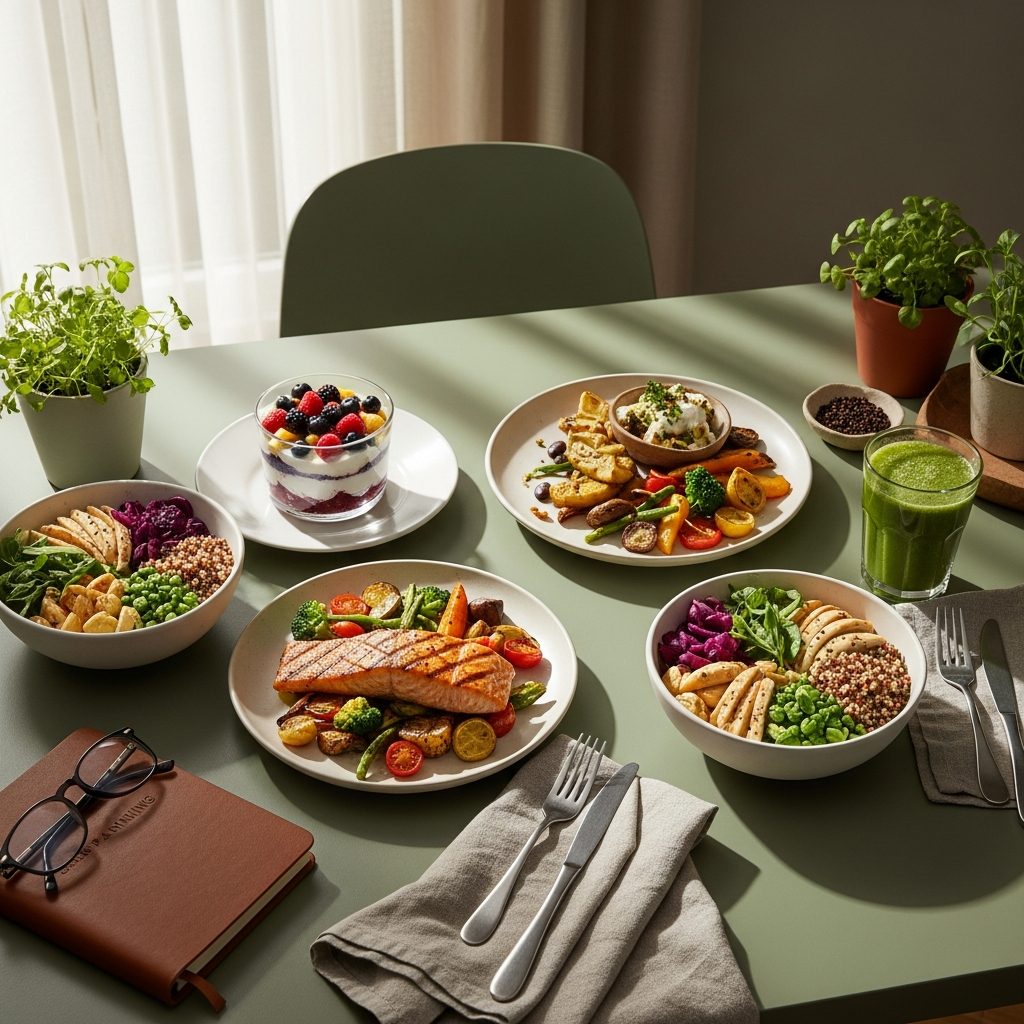
Day 1 starts with a Greek yogurt parfait layered with berries, nuts, and a drizzle of honey. It packs 28 grams of protein and keeps you satisfied until lunch without that mid-morning energy crash. Lunch features a Mediterranean chicken salad with chickpeas, feta, and olive oil—it’s light but substantial, and the healthy fats help with hormone production.
Dinner on Day 1 is baked salmon with roasted Brussels sprouts and quinoa. Salmon is loaded with omega-3s that reduce inflammation and support brain health (because yes, brain fog is real during this transition). The combination delivers 42 grams of protein plus those crucial healthy fats your body needs right now.
Day 2 introduces a veggie-packed egg scramble for breakfast. I use [this non-stick ceramic pan]—it requires almost zero oil and cleanup is ridiculously easy, which matters on busy mornings. The scramble includes spinach, tomatoes, and a sprinkle of cheese for 24 grams of protein plus iron and calcium.
If you’re looking for more morning inspiration that keeps protein high, check out these [hormone-balancing breakfast ideas for women over 40] that pair perfectly with this week’s plan.
Day 3-4: Building Momentum and Flavor
By Day 3, you’re hitting your stride. Your body is adjusting to the increased protein, and you’re probably noticing steadier energy levels throughout the day.
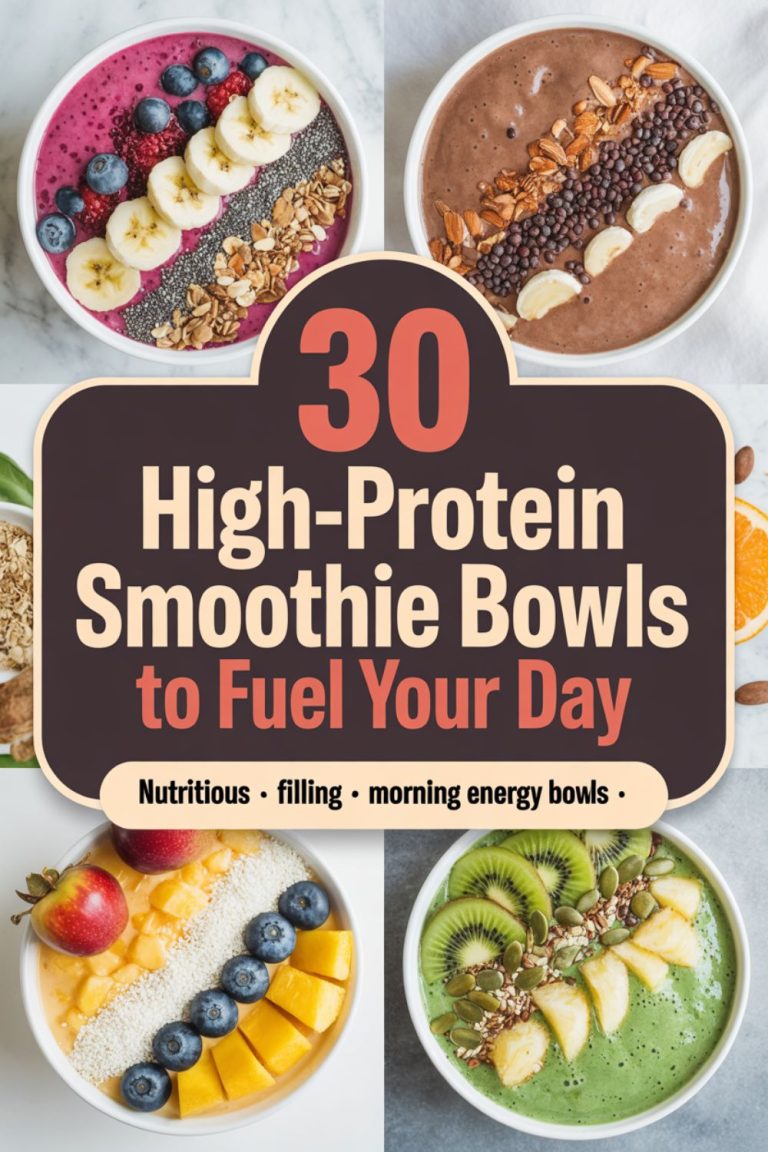
Day 3 features a protein smoothie bowl for breakfast—but not those Instagram-worthy bowls that taste like disappointment. This one uses frozen berries, protein powder, Greek yogurt, and spinach (you won’t taste it, promise), topped with almonds and chia seeds. It’s refreshing, filling, and delivers 32 grams of protein.
Lunch is a turkey and avocado wrap using a high-fiber tortilla. The avocado provides healthy fats that help your body absorb fat-soluble vitamins, while the turkey keeps you satisfied without feeling heavy. Afternoon snack is cottage cheese with sliced peaches—simple, but that 15 grams of protein prevents the 3 PM energy slump that used to derail your afternoons.
Dinner on Day 3 is lean beef stir-fry with loads of colorful vegetables. Beef provides heme iron (more easily absorbed than plant sources), which is crucial since many women over 40 experience low iron levels. [Get the complete stir-fry recipe] with the exact seasoning blend that makes this taste like takeout without the sodium overload.
Day 4 introduces lentil soup for lunch—a plant-based protein source that’s also incredibly high in fiber. FYI, fiber becomes increasingly important for digestive health and blood sugar management as we age. This soup is one of those make-ahead staples that actually tastes better the next day.
For those exploring more plant-based proteins while maintaining high intake, these [lentil and legume-based meals] and [vegetarian high-protein options] offer excellent variety throughout the week.
Understanding Your Changing Nutritional Needs
Let’s talk science for a second, but in plain English. After 40, several things happen simultaneously that make protein crucial:
Declining estrogen affects how your body builds and maintains muscle. Without adequate protein, you lose muscle faster during this transition. More muscle mass means better metabolic health, stronger bones, and easier weight management.
Insulin sensitivity changes, making blood sugar management trickier. Protein helps stabilize blood sugar by slowing digestion and preventing those dramatic spikes and crashes that trigger cravings and energy fluctuations.
Bone density decreases, increasing osteoporosis risk. While calcium and vitamin D get all the attention, protein is equally critical for bone health. It provides the structural framework that minerals bind to.
Inflammation tends to increase, contributing to joint pain, slower recovery, and various chronic conditions. Protein from quality sources (especially those with omega-3s like salmon and anti-inflammatory plant proteins) helps combat this.
According to research from the Mayo Clinic on nutrition for aging women, combining adequate protein with strength training is the most effective strategy for maintaining metabolic health during perimenopause and menopause.
[The complete meal plan] incorporates all these considerations into every single day, so you’re not just eating protein—you’re supporting your entire hormonal and metabolic system.
Day 5-6: Expanding Your Protein Repertoire
The weekend meals acknowledge that you might have more time for food prep or might want something that feels more special than weekday fare.
Day 5 breakfast is a veggie-loaded omelet with smoked salmon. This combination is phenomenal—you’re getting protein from eggs and salmon, plus the omega-3s, vitamin D, and B vitamins that support energy production and mood stability. I use [this omelet maker] that creates perfect, fluffy omelets without the flipping anxiety.
Lunch features a quinoa and black bean Buddha bowl with avocado and tahini dressing. Quinoa is one of the few plant proteins that’s complete (containing all essential amino acids), making it incredibly valuable for days you’re eating less meat. The tahini provides calcium and the creamy texture makes this bowl genuinely craveable.
Dinner is herb-crusted pork tenderloin with roasted root vegetables. Pork tenderloin is surprisingly lean and delivers high-quality protein plus B vitamins that support energy metabolism—something that often needs extra support during hormonal transitions.
Day 6 introduces a new breakfast option: protein pancakes made with oat flour, eggs, and mashed banana. These aren’t sad, rubbery diet pancakes—they’re legitimately fluffy and delicious. [Get the full pancake recipe] with the secret ingredient that makes them taste indulgent while delivering 25 grams of protein per serving.
Speaking of weekend meals that feel special while staying on track, try these [elevated high-protein brunch ideas] and [protein-packed comfort food makeovers] that prove healthy eating doesn’t mean sacrificing satisfaction.
Day 7: Setting Up for Long-Term Success
The final day focuses on sustainability and teaching you how to continue this approach beyond the week.
Breakfast is a make-ahead egg muffin situation—basically mini frittatas you bake in a muffin tin and grab throughout the week. I use [this silicone muffin pan] because they pop out effortlessly without any spray or greasing. You can customize these with whatever vegetables and proteins you have on hand.
Lunch is a classic Cobb salad with grilled chicken, hard-boiled eggs, bacon, avocado, and blue cheese. It’s proof that high-protein eating doesn’t have to feel restrictive—this salad is loaded with flavor and keeps you satisfied for hours.
Dinner on Day 7 is shrimp and vegetable skewers with a Greek yogurt-based tzatziki sauce. Shrimp is one of the leanest protein sources available and cooks in minutes, making it perfect for busy weeknights. The tzatziki adds extra protein while keeping everything light and refreshing.
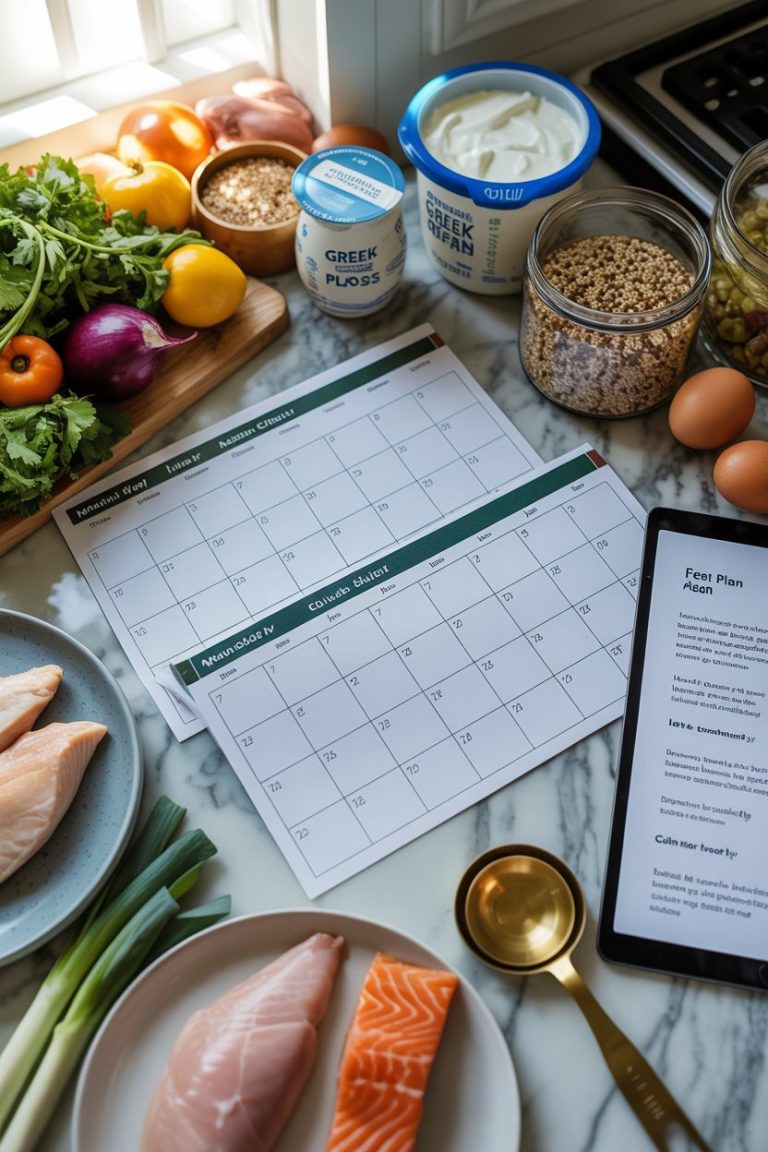
By the end of Day 7, you’ll have experienced enough variety to understand how to build your own high-protein meals moving forward. [The downloadable plan] includes detailed instructions for continuing this approach, adjusting portions based on your specific needs, and troubleshooting common challenges.
The Snack Strategy That Actually Works
Let’s be honest—snacks can make or break any eating plan. If you’re starving between meals, you’ll grab whatever’s convenient, and that usually means something that doesn’t support your goals.
This plan includes two daily snacks, each providing 10-20 grams of protein:
- Greek yogurt with a handful of almonds
- Protein smoothie with frozen fruit and spinach
- Hard-boiled eggs with cherry tomatoes
- Cottage cheese with cucumber and everything bagel seasoning
- Turkey roll-ups with cheese and avocado
- Protein energy balls (recipe included in the full plan)
These aren’t afterthoughts—they’re strategic protein hits that keep your metabolism active, prevent muscle breakdown between meals, and stop you from arriving at dinner absolutely ravenous.
For more creative options that travel well, explore these [portable high-protein snacks for busy women] and [office-friendly protein options] that don’t require refrigeration.
One game-changing tool? [This insulated lunch bag] with separate compartments. It keeps everything fresh without turning into a soggy mess by midday, which means you’ll actually eat those healthy snacks instead of hitting the vending machine.
Meal Prep Without the Overwhelm
I know what you’re thinking—meal prep sounds great in theory but feels impossible when you’re already juggling too much. That’s why this plan uses a streamlined approach that takes about 90 minutes on Sunday and sets you up for the entire week.
The simplified prep strategy:
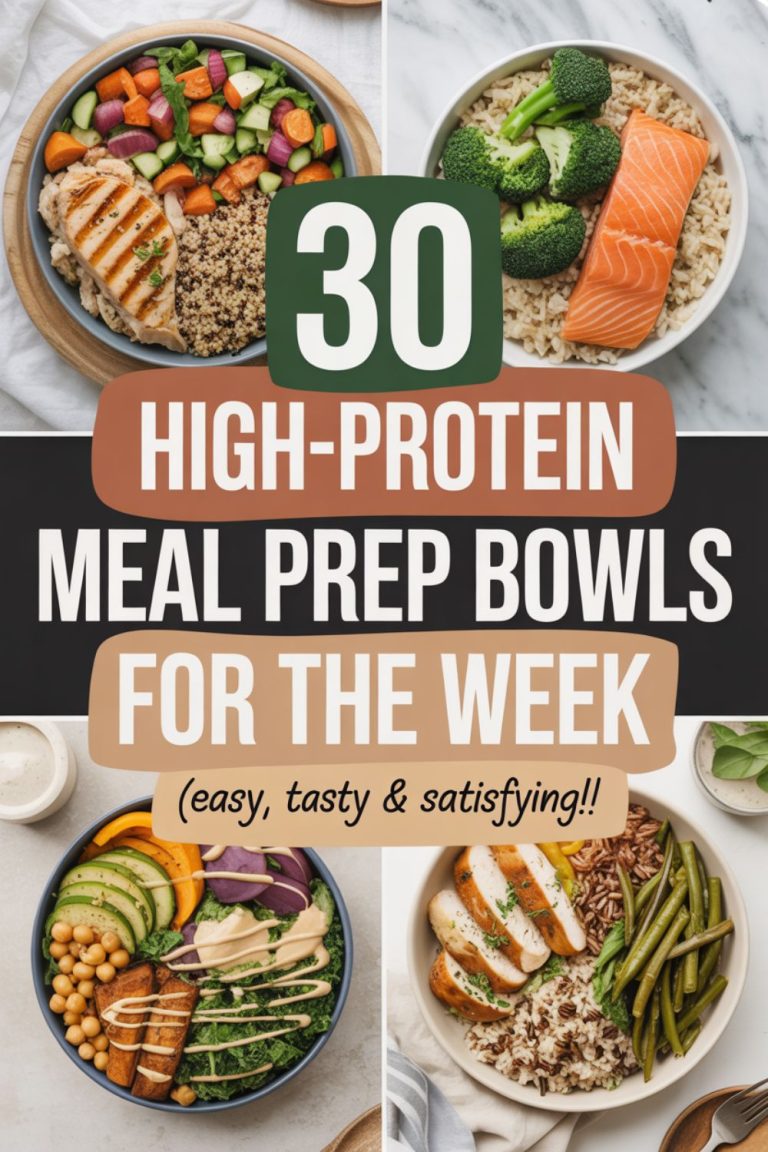
- Cook proteins in bulk – Grill chicken breasts, bake salmon, and hard-boil a dozen eggs
- Prep vegetables – Wash and chop vegetables for salads, roast a large batch for bowls
- Make one or two sauces – Tahini dressing, tzatziki, or vinaigrette that works across multiple meals
- Portion out snacks – Divide nuts, cut vegetables, portion cottage cheese into small containers
That’s it. You’re not cooking complete meals—you’re preparing components that you’ll mix and match throughout the week. This keeps things fresh while still saving massive amounts of daily time.
I store everything in [these glass containers with divided sections]—you can see what’s inside without opening them, they’re microwave and dishwasher safe, and they don’t absorb odors or stains like plastic.
[The complete meal plan download] includes step-by-step photo guides for the entire prep process, so you’re never guessing what to do next.
Navigating Social Situations and Dining Out
One of the biggest challenges? Maintaining your high-protein focus when you’re not eating at home. The meal plan includes a comprehensive restaurant guide specifically for this stage of life.
Quick tips that work everywhere:
- At Mexican restaurants, order fajitas without the tortillas—all the protein, vegetables, and flavor with better macros
- Italian spots: Ask for grilled fish or chicken with a double portion of vegetables instead of pasta
- Asian restaurants: Opt for stir-fries with extra protein, light sauce, and vegetable-based sides
- American diners: Breakfast for dinner works great—omelets, eggs, and sides of protein-rich foods
The key is entering any dining situation with a strategy. [Download the complete dining out guide] that covers 15+ cuisine types with specific menu picks and modification requests that never feel awkward.
IMO, the ability to maintain healthy habits while still enjoying social meals is what separates sustainable lifestyle changes from restrictive diets that eventually fail.
Supplements Worth Considering (And Skipping)
Let’s cut through supplement industry nonsense. Most products marketed to women over 40 are overpriced combinations of things you don’t need wrapped in pink packaging.
Actually worth considering:
- Protein powder – Convenient for smoothies and boosting protein in various recipes. I use [this unflavored collagen protein] because it dissolves completely and supports skin, joints, and bones.
- Vitamin D3 – Most women over 40 are deficient, and it’s crucial for bone health and mood
- Omega-3s – If you don’t eat fatty fish regularly, supplementing helps with inflammation and brain health
- Magnesium – Supports sleep quality, which often gets disrupted during perimenopause
Skip these entirely:
- “Menopause support” blends with proprietary formulas (usually overpriced herbs with minimal evidence)
- Metabolism boosters (they don’t work, just marketing)
- Collagen drinks promising miracle results (collagen protein is useful, but magical beauty claims are oversold)
The meal plan is designed to provide maximum nutrition from whole foods, with supplements only filling genuine gaps. [Get the complete supplement guide] with specific brands and dosing recommendations included in the downloadable bundle.
Adjusting for Your Activity Level
Not everyone has the same activity level, and your protein needs should reflect that. The base meal plan provides roughly 100-120 grams of protein daily, which works for moderately active women.
If you’re highly active (regular strength training, intense cardio, physically demanding job), you’ll want closer to 130-150 grams daily. The plan includes simple add-ons: an extra snack, larger portions at meals, or adding protein powder to breakfast.
If you’re less active or smaller-framed, you might be fine with 80-100 grams daily. The plan provides guidance for scaling portions down while maintaining the nutrient density and satisfaction factor.
[The downloadable plan includes] a personalized calculator that determines your specific protein target based on your weight, activity level, and goals. No guessing, no generic recommendations—just your exact numbers.
For those actively strength training, these [post-workout recovery meals] and [muscle-building dinner formulas] provide additional protein-rich options that support your fitness goals.
The Hormone-Balance Connection
Here’s something most meal plans completely ignore: what you eat directly impacts your hormonal balance during perimenopause and menopause.
This plan emphasizes:
- Cruciferous vegetables (broccoli, Brussels sprouts, cauliflower) that support healthy estrogen metabolism
- Flax seeds containing lignans that may help reduce hot flashes
- Fatty fish rich in omega-3s that decrease inflammation and support mood stability
- Fermented foods like Greek yogurt that support gut health (increasingly important for hormone balance)
The meals are structured to include these hormone-supportive foods throughout the week without making it feel forced or overly complicated. You’re just eating delicious food that happens to work with your body’s changing needs.
According to research on nutritional approaches to menopause symptoms, women who maintain high protein intake combined with phytoestrogen-rich foods report fewer hot flashes and better overall symptom management than those following standard diets.
Related Recipes You’ll Love
Looking for more ways to keep your protein intake high while enjoying delicious meals? Here are some recipes that complement this 7-day plan perfectly:
More Breakfast Ideas: Try these [quick high-protein breakfast bowls] and [make-ahead egg muffin variations] for busy mornings.
Lunch Inspiration: Check out these [protein-packed salad formulas] and [soup and stew combinations] that keep you satisfied.
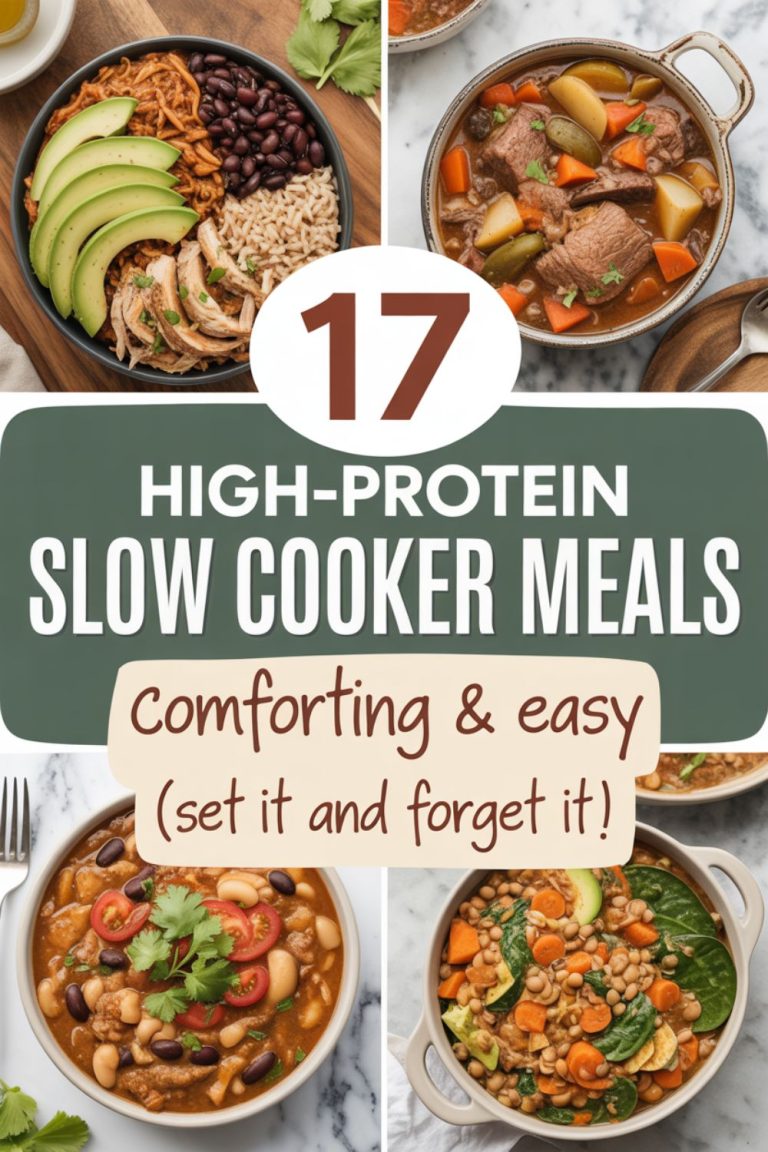
Dinner Solutions: Explore these [30-minute high-protein dinners] and [slow cooker protein meals] for effortless weeknight cooking.
Complete Guides: Browse our [high-protein meal prep guide for women] and [hormone-balancing meal ideas] for extended planning.
Making This Your Long-Term Reality
Seven days is just the beginning. The real transformation happens when these habits become your new normal—when high-protein eating feels natural, not forced.
[The complete downloadable plan] includes a transition guide that shows you how to:
- Build your own high-protein meals using the framework you’ve learned
- Adjust portions and timing based on how your body responds
- Navigate holidays, vacations, and life’s inevitable curveballs
- Recognize when you need more protein vs. when other nutrients are lacking
- Continue seeing progress beyond the initial week
This isn’t about perfection or rigid rules. It’s about giving your body the protein it needs to thrive during a significant life transition. Some days will be perfect, some will be chaotic—and that’s completely fine as long as the overall pattern supports your health.
You’ve got enough to manage right now without adding complicated nutrition protocols to the list. This plan simplifies high-protein eating into a practical, sustainable approach that works with real life, not against it.
[Download your complete 7-Day High-Protein Meal Plan for Women Over 40] and start giving your body the nutritional support it deserves during this transition. Everything you need—complete meal plans, shopping lists, prep guides, restaurant strategies, and personalization tools—is ready for you right now.
Your metabolism, muscles, bones, and energy levels will thank you. And honestly? You’ll probably wonder why you didn’t prioritize protein like this years ago.