21-Day High-Protein Meal Prep Challenge – Printable Guide
Three weeks. That’s what it takes to build a real habit, break your takeout addiction, and actually see your body respond to consistent high-protein eating. Not three days of motivated enthusiasm followed by a pizza binge. Not a vague commitment to “eat better.” Twenty-one actual days of showing up, meal prepping like you mean it, and hitting your protein targets.
I’ll be honest—I’ve failed at meal prep more times than I’ve succeeded. Good intentions, zero follow-through, and a graveyard of wilted vegetables in my crisper drawer. But when I committed to a structured 21-day challenge with clear guidelines and accountability, something clicked. Meal prep went from this overwhelming chore to a Sunday ritual that actually sets me up for success.
This isn’t about becoming some meal prep robot who eats the same bland chicken and rice for three weeks straight. It’s about building the skills, systems, and confidence to consistently feed yourself high-protein meals without losing your mind or your social life.
Why 21 Days Changes Everything
Before you roll your eyes at another arbitrary challenge timeline, hear me out. Twenty-one days isn’t random—it’s the minimum time required to shift from conscious effort to automatic behavior. Week one is survival, week two is adaptation, and week three is where the habit actually solidifies.
The first week is brutal. You’re learning new recipes, figuring out your meal prep workflow, and probably screwing up portions at least once. Your brain resists the change because change is uncomfortable. You’ll question why you’re doing this around day four when your coworker’s leftover birthday cake is calling your name.
Week two is where things smooth out. Your meal prep routine becomes more efficient, you’ve identified which meals you actually like, and your body’s adapted to higher protein intake. The initial water weight drops off, your energy stabilizes, and you start seeing visible changes in the mirror.
Week three is the magic zone. Everything feels automatic. You instinctively know how much protein you need, meal prep doesn’t feel like a chore anymore, and you’ve built real momentum. This is when most people decide to keep going past the 21 days because they finally feel in control of their eating.
According to [research on habit formation and behavioral change], it takes an average of 66 days to form a true automatic habit, but 21 days is the critical threshold where new behaviors start feeling less forced and more natural. That’s your goal here—make high-protein meal prep feel natural instead of like you’re fighting yourself every step.
The High-Protein Advantage for Meal Prep
Protein-focused meal prep has specific advantages over carb-heavy approaches, and I’m not just talking about muscle gains and satiety. These are practical benefits that make your life easier.
Protein-rich foods stay fresh longer. Cooked chicken breast, hard-boiled eggs, and cottage cheese have decent shelf lives compared to carb-heavy foods that get soggy or stale. Your Tuesday lunch tastes almost as good as your Sunday lunch because protein maintains its texture better than pasta or bread.
Protein keeps you satisfied between meals. When your meal prep is carb-focused, you’re ravenous two hours later and hunting for snacks. High-protein meals keep you full for 4-5 hours easily, which means you actually eat what you prepped instead of abandoning ship for whatever’s convenient.
Protein protects your investment. If you’re spending time meal prepping, you presumably want results—weight loss, muscle gain, better body composition. Adequate protein (0.8-1 gram per pound of body weight) ensures you’re building or maintaining lean tissue, not just losing weight indiscriminately.
Each day in this challenge aims for 130-150 grams of protein across three meals and two snacks, totaling around 1600-1800 calories. That’s the sweet spot for most people trying to lose fat while maintaining muscle or for active individuals supporting their training.
Challenge Structure: How This Actually Works
This isn’t one of those vague “eat more protein” challenges where you’re left guessing what to do. I’ve structured this into three distinct weeks, each building on the last, with complete meal plans and progressive skill-building.
Week 1: Foundation Building
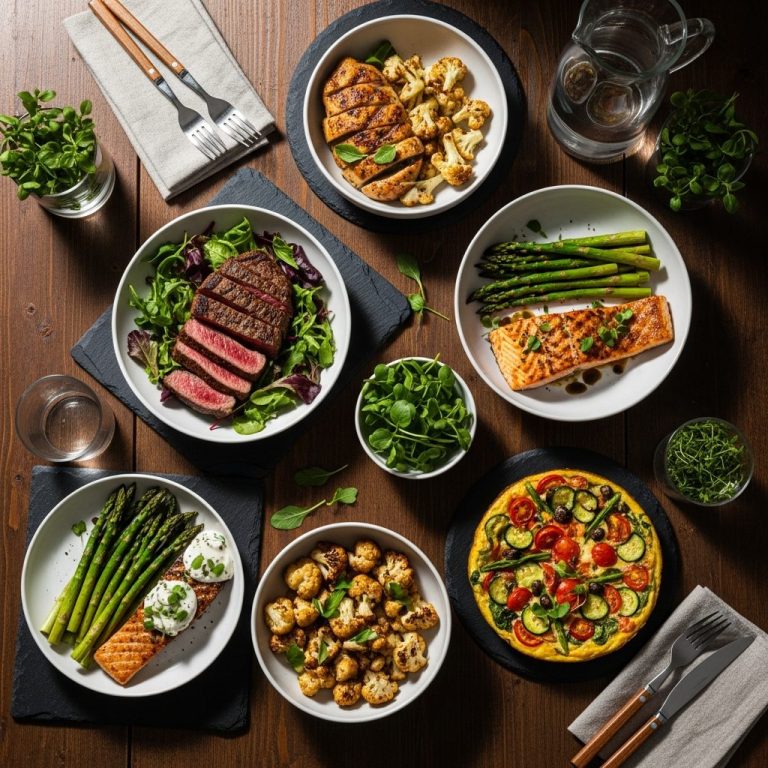
Focus on learning basic meal prep techniques and establishing your Sunday routine. Meals are simple, familiar, and forgiving—think grilled chicken, baked salmon, egg-based breakfasts, and straightforward vegetable sides. Nothing fancy, nothing overwhelming. Your goal is to successfully prep and eat your own food for seven days straight.
Week 2: Variety and Efficiency
Introduce new proteins, cooking methods, and flavor profiles while streamlining your prep process. You’ll batch-cook multiple proteins at once, prep ingredients that work across several meals, and learn to use your time more efficiently. Meals get more interesting but your prep time actually decreases.
Week 3: Mastery and Sustainability
Complex recipes, international flavors, and the confidence to customize meals on the fly. By week three, you understand your protein needs intuitively, know which meals you genuinely enjoy, and can adapt recipes to your preferences without derailing your macros.
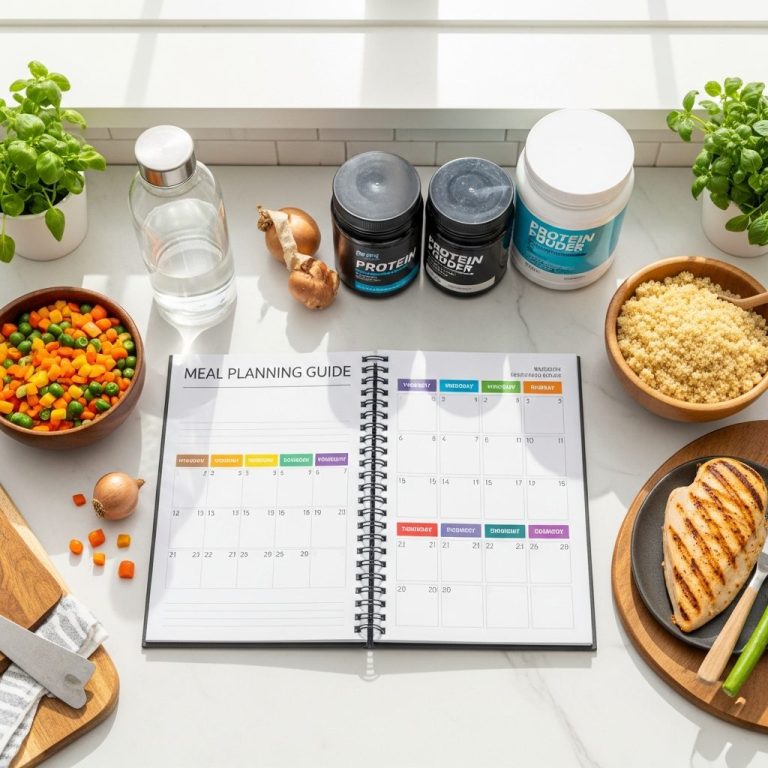
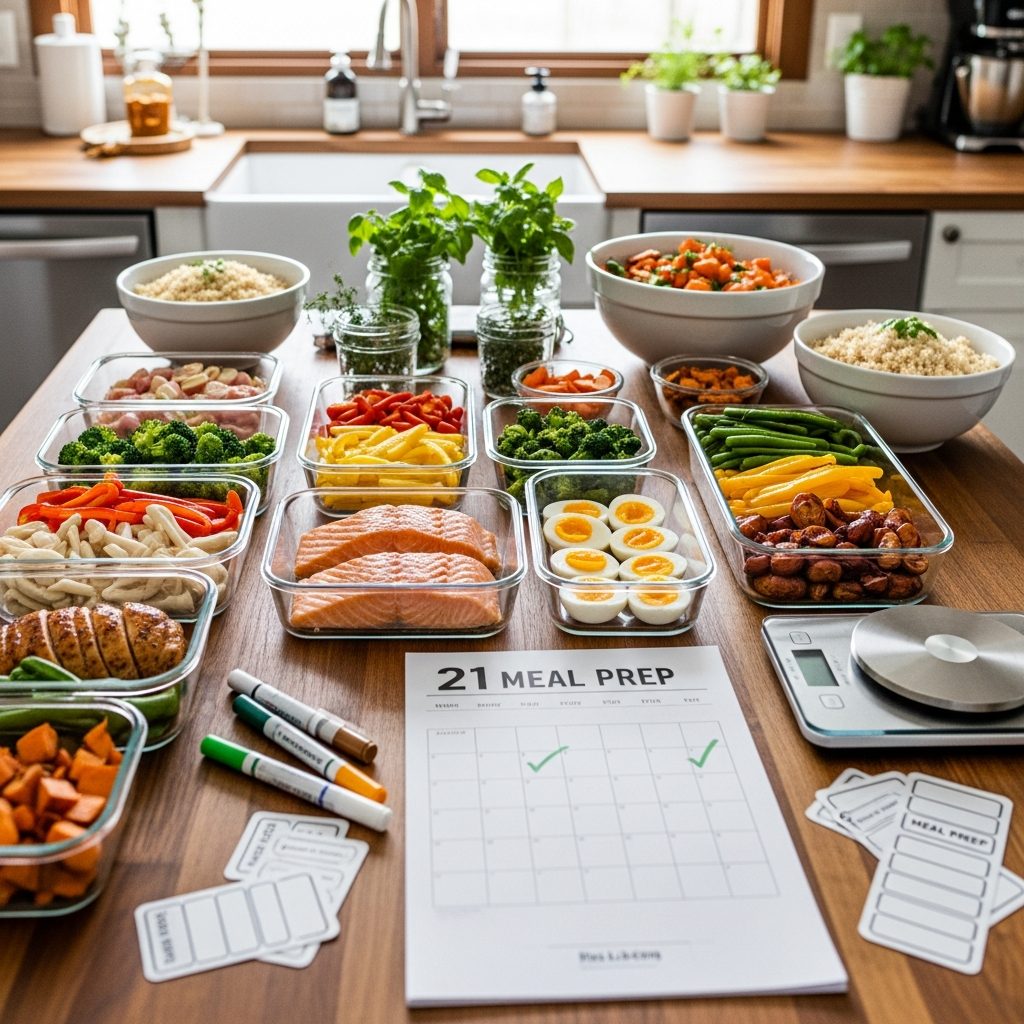
The [printable 21-day guide] includes weekly shopping lists, day-by-day meal plans with macro breakdowns, prep timelines, and troubleshooting tips for when things inevitably go sideways. Print it, check off each day, and watch your streak build.
Speaking of getting started with meal prep, you might also love [this beginner’s guide to batch cooking] or [these make-ahead protein breakfast recipes]—both make week one significantly less overwhelming.
Week 1: Getting Your Systems in Place
Days 1-3: The Learning Curve
Your first meal prep session will take longer than expected. Accept this now. You’re learning where everything lives in your kitchen, figuring out timing, and probably burning something. Totally normal.
Start with protein-packed egg muffins for breakfast—whisk eggs with vegetables and cheese, pour into a [muffin tin], and bake. Make a dozen on Sunday, grab two each morning, and you’re done. No morning cooking, no skipping breakfast, no excuses.
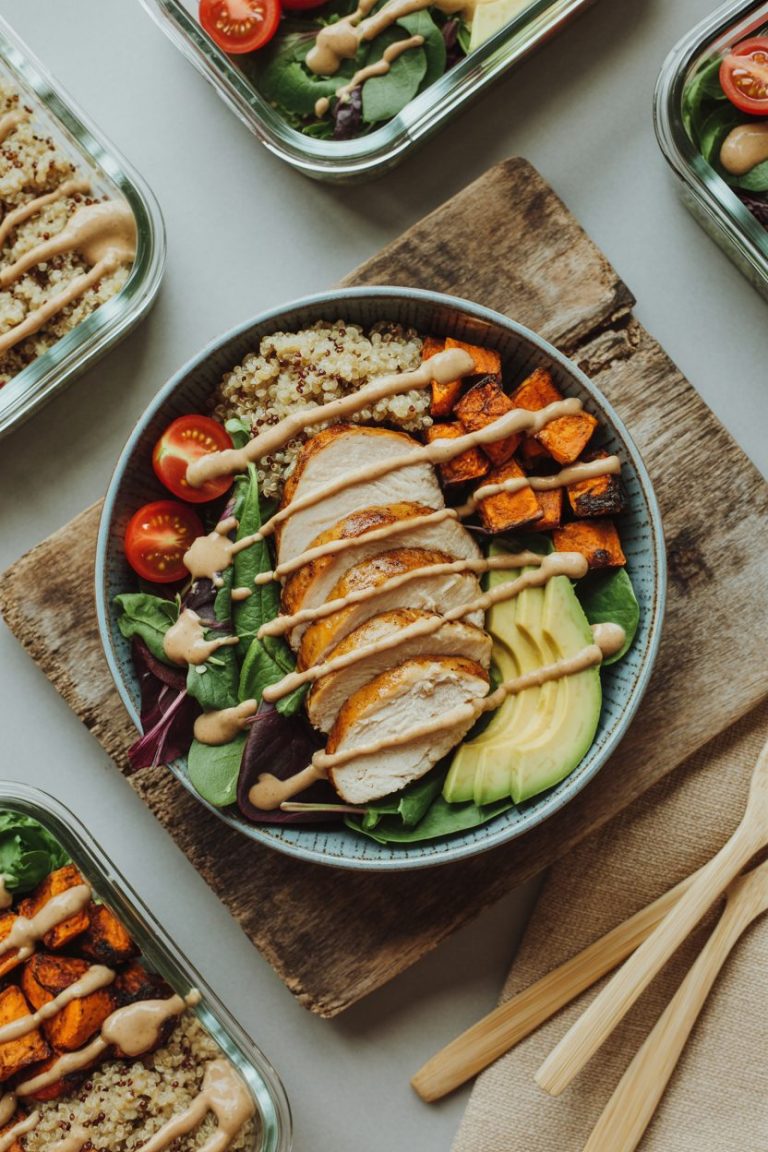
For lunch, keep it stupid simple: grilled chicken breast over mixed greens with cherry tomatoes, cucumber, and a balsamic vinaigrette you batch-make in a jar. Use [this grill pan] if you don’t have outdoor grill access—gives you those nice char marks and cooks four breasts simultaneously.
Dinners this week are baked salmon with roasted broccoli and sweet potato. Season the salmon with lemon and dill, toss the vegetables in olive oil, throw everything on sheet pans, and set a timer. One pan, minimal cleanup, maximum protein. [Get Full Recipe] for the exact timing and temperatures.
Snacks are where most people falter, so prep them too. Hard-boil a dozen eggs using [this egg cooker that basically runs itself], portion Greek yogurt into individual containers, and pre-bag almonds in 1-ounce servings. When hunger hits, you have protein-rich options ready.
Days 4-7: Finding Your Rhythm
By mid-week, you’ve identified what works and what doesn’t. Maybe you hate salmon (swap it for chicken thighs). Maybe the egg muffins aren’t filling enough (add more eggs or a side of turkey sausage). Adjust as needed—this challenge is about building sustainable habits, not suffering through foods you hate.
Introduce a turkey chili that makes phenomenal leftovers. Brown ground turkey with onions and peppers, add crushed tomatoes and beans, let it simmer while you prep other meals. Portion into containers and you’ve got lunches for days. The protein content is solid—about 35 grams per serving—and it actually tastes better on day three than day one.
Add a protein smoothie bowl option for mornings when you want something different. Blend frozen berries, protein powder, Greek yogurt, and a splash of almond milk until thick, then top with granola and more fruit. Feels like dessert, hits your protein targets, takes five minutes.
Your snack game should include cottage cheese at this point. I know, I know—cottage cheese has a PR problem. But mixed with everything bagel seasoning or pineapple chunks, it’s actually good and packs 25 grams of protein per cup. Give it a chance.
For more week-one inspiration, check out [these foolproof meal prep recipes for beginners] and [this guide to storing prepped meals properly]—both prevent common rookie mistakes.
Week 2: Leveling Up Your Skills
Days 8-10: Efficiency Optimization
Week two is about doing more with less time. You’re batch-cooking multiple proteins simultaneously—chicken in the oven, ground turkey on the stovetop, eggs boiling away. Your prep time drops from three hours to 90 minutes because you’ve figured out the workflow.
Introduce shrimp stir-fry bowls to your rotation. Shrimp cooks in literally three minutes and packs serious protein (24 grams per 4 ounces). Prep your vegetables ahead, keep frozen shrimp in your freezer, and you can assemble these bowls in the time it takes to order takeout. Serve over cauliflower rice to keep carbs reasonable. [Get Full Recipe] because the sauce makes or breaks this meal.
Try protein pancakes for weekend breakfast meal prep. Mix protein powder, oats, egg whites, and mashed banana, cook a huge batch, then freeze with parchment paper between each pancake. Microwave for 30 seconds on busy mornings and you’ve got a high-protein breakfast that feels like a treat.
Your lunch game evolves to mason jar salads where you layer dressing on the bottom, hearty vegetables in the middle, and greens on top. Flip and shake when you’re ready to eat. They stay fresh for five days and give you portion control without thinking about it. I use [these wide-mouth mason jars] because regular jars are too narrow for proper layering.
Days 11-14: Flavor Expansion
You’re confident with the basics now, so let’s make food interesting. Same protein targets, but we’re bringing actual flavor to the party.
Make bison burgers without buns, served over mixed greens with all your favorite toppings. Bison is leaner than beef but equally flavorful and protein-dense. Form patties on Sunday, freeze half for week three, cook the rest for immediate use.
Add Greek-style chicken bowls with tzatziki, cucumber, tomatoes, olives, and feta over quinoa. The tzatziki is just Greek yogurt mixed with grated cucumber, lemon, and garlic—doubles as your protein boost and sauce. Meal prep wins.
Experiment with tofu scrambles even if you’re not vegetarian. Crumbled firm tofu seasoned with turmeric, nutritional yeast, and your choice of vegetables provides plant-based protein variety. Plus, it keeps your taste buds from getting bored with animal proteins seven days straight.
If you’re loving the international flavors, try [these Asian-inspired meal prep bowls] or [this Mediterranean chicken recipe]—both fit perfectly into week two’s complexity level.
Week 3: Mastery Mode Activated
Days 15-17: Creative Freedom
Week three is where you start improvising based on what you’ve learned. You understand portion sizes intuitively, know which meals you genuinely enjoy, and can adapt recipes on the fly without derailing your macros.
Challenge yourself with stuffed bell peppers filled with ground turkey, quinoa, black beans, and spices. They look impressive, taste amazing, and pack about 40 grams of protein per serving. Make eight at once, freeze half for future weeks. Your future self will thank you.
Try protein-loaded lentil soup that makes incredible leftovers. Lentils provide plant-based protein (18 grams per cooked cup), and when you add chicken or turkey, you’re looking at 35+ grams per bowl. It’s hearty, warming, and perfect for when you’re sick of eating “clean” meals that leave you unsatisfied.
Add egg roll in a bowl to your dinner rotation—all the flavor of takeout egg rolls without the wrapper. Ground pork or turkey, coleslaw mix, soy sauce, ginger, and garlic. Cooks in 20 minutes, meal preps beautifully, and everyone who sees it will want the recipe. [Get Full Recipe] for the exact proportions.
Days 18-21: Sustainable Systems
The final four days aren’t about new recipes—they’re about cementing the systems that make meal prep sustainable long-term. You’re proving to yourself that this isn’t just a three-week sprint but a skill set you can maintain indefinitely.
Prep a complete rotation of freezer-friendly meals this week. Double every recipe and freeze half. By the end of week three, you’ll have a freezer stash that prevents future “I don’t feel like cooking” moments from derailing your progress.
Master the art of component meal prep where you prep ingredients rather than complete meals. Cook three proteins, roast four types of vegetables, make two different grain options, and mix-and-match throughout the week based on what sounds good. This prevents food fatigue while maintaining structure.
Perfect your grab-and-go protein snack system. String cheese, protein bars, beef jerky, roasted edamame, hard-boiled eggs—you should have five different options ready at all times. Hunger management is the difference between success and ordering pizza.
For ongoing inspiration beyond these 21 days, check out [this monthly meal prep plan] and [these freezer meal strategies]—both help you maintain momentum after the challenge ends.
The Essential Meal Prep Tools You Actually Need
Let me save you from buying useless kitchen gadgets. You don’t need seventeen specialized tools. You need maybe five things, and they’ll change your entire meal prep game.
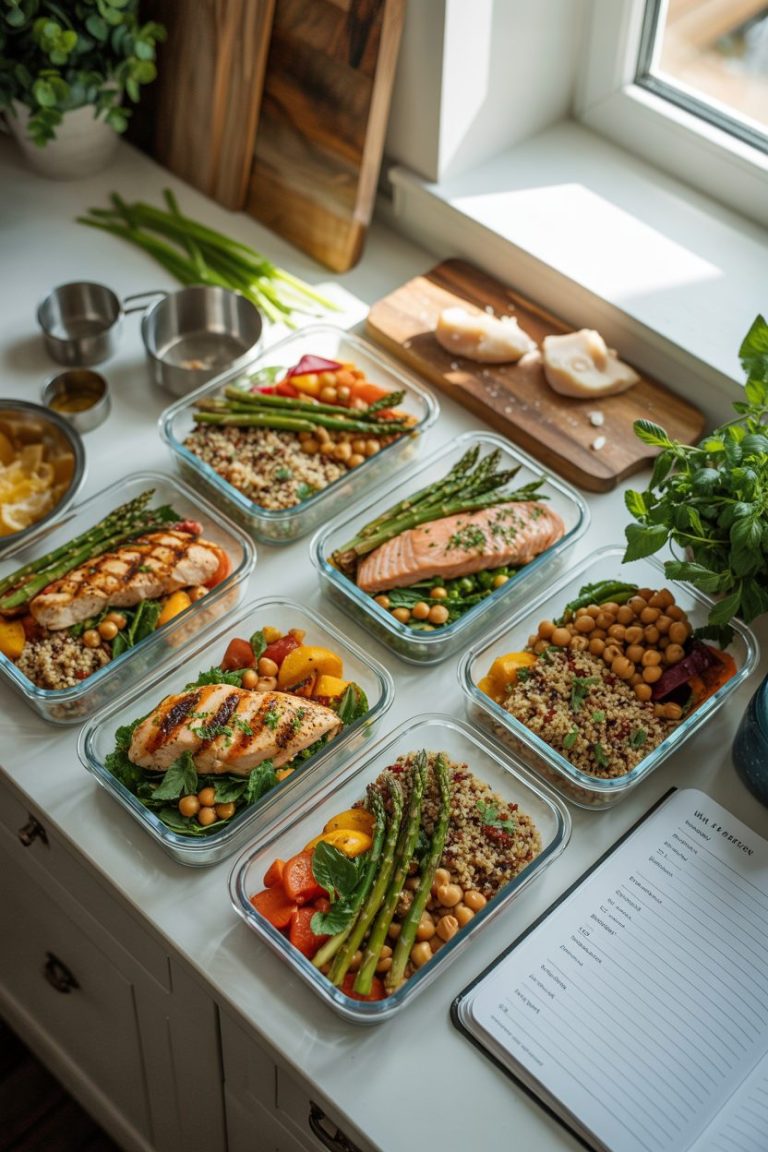
Quality containers are non-negotiable. I learned this after ruining approximately 40 plastic containers that stained, warped, and smelled like garlic forever. [These glass containers with snap lids] cost more upfront but last years and don’t turn your food into a science experiment. Get the set with multiple sizes—small for snacks, medium for lunches, large for dinner batch cooking.
A digital food scale eliminates guesswork. You think you’re eating 4 ounces of chicken but you’re actually eating 6, which explains why your macros never match your tracking. A basic [kitchen scale] costs 15 bucks and makes you accountable. Weigh your proteins for one week and you’ll understand your portions way better.
Sheet pans are your batch-cooking best friend. Get two large ones. You can roast vegetables on one, bake protein on the other, and have an entire meal’s worth of food ready in 25 minutes. I use [these heavy-duty pans] that don’t warp in high heat—cheap pans buckle and your food cooks unevenly.
A slow cooker or Instant Pot handles dinner while you’re at work. Throw in chicken breasts, salsa, and taco seasoning before leaving in the morning. Come home to shredded chicken that works in bowls, salads, or wraps all week. [This 6-quart Instant Pot] does everything and takes up less space than a slow cooker.
Meal prep labels and markers prevent the mystery container situation. Label everything with contents and date. Your Tuesday self won’t remember if that container is turkey chili or beef stroganoff, and guessing wrong is disappointing. Basic [removable labels] from any office supply store work perfectly.
Macro Tracking Without Losing Your Mind
Look, I’m not suggesting you weigh and track every gram of food for the rest of your life. That’s miserable and unsustainable. But during this 21-day challenge, tracking teaches you what proper portions actually look like.
Week one: Track everything religiously. Use an app like MyFitnessPal or Cronometer and log every meal, snack, and random handful of almonds. Yes, it’s tedious. Yes, you’ll be shocked by how many calories are in that “small” spoonful of peanut butter. This is the learning phase.
Week two: Track main meals, eyeball snacks. By now you understand what 30 grams of protein looks like on your plate. You can estimate portions reasonably well. Track your three main meals for accuracy but don’t stress about whether you ate 10 or 12 almonds.
Week three: Intuitive with spot checks. You’ve built enough awareness to eat appropriately without obsessive tracking. Weigh your protein portions occasionally to keep yourself honest, but you shouldn’t need the app open at every meal.
The goal is to build nutritional awareness, not develop an eating disorder. IMO, people who track forever are either competitive athletes or heading toward unhealthy relationships with food. Learn the skill, then trust yourself to execute without constant surveillance.
According to [nutritional research on self-monitoring and dietary adherence], short-term tracking significantly improves awareness and compliance, but long-term obsessive tracking correlates with increased stress and decreased dietary satisfaction. Find your balance.
Troubleshooting Common Meal Prep Disasters
Even with perfect planning, things go wrong. Here’s how to handle the most common meal prep catastrophes without abandoning the entire challenge.
Problem: Your Chicken Breast Is Dry as Hell
Stop overcooking it. Chicken breast is done at 165°F internal temperature, not when it looks like shoe leather. Get a [meat thermometer], check early, and pull it off heat as soon as it hits temperature. The residual heat will bring it up another few degrees while resting.
Brine your chicken for an hour before cooking—just water and salt. The meat absorbs moisture and stays juicy even if you slightly overcook it. Alternatively, switch to chicken thighs which have more fat and forgive timing mistakes better.
Problem: Everything Tastes Bland by Wednesday
You’re underseasoning. Meal prep needs more seasoning than freshly cooked food because flavors mellow during storage. Be aggressive with spices, herbs, garlic, and acid (lemon juice, vinegar).
Store your seasoning separately when possible. Keep sauce or dressing in small containers and add just before eating. This keeps food from getting soggy and flavors from disappearing.
Problem: Vegetables Turn Gross and Mushy
Stop storing wet vegetables. After washing, dry them thoroughly before portioning. Better yet, store raw vegetables separately and quickly roast or steam them right before eating. A five-minute steam bag in the microwave beats soggy, sad broccoli that’s been sitting four days.
Some vegetables meal prep better than others. Broccoli, Brussels sprouts, and cauliflower hold up well. Delicate greens, zucchini, and mushrooms get gross fast. Learn which vegetables survive and plan accordingly.
Problem: You’re Bored Out of Your Mind
Sauces and seasonings are game-changers. The same grilled chicken tastes completely different with buffalo sauce versus teriyaki versus pesto. Make several sauce options on Sunday and rotate them throughout the week.
Texture variety matters too. If everything’s soft and steamed, your brain rebels against the monotony. Include crunchy elements—toasted nuts, fresh vegetables, crispy chickpeas—to keep meals interesting.
For more solutions to common issues, try [this guide to fixing dry chicken] and [these strategies for flavor-packed meal prep]—both address the problems that make people quit mid-challenge.
How to Meal Prep Without Living in Your Kitchen
The biggest objection to meal prep is time. I get it—you’re not trying to spend your entire Sunday cooking. Here’s how to prep efficiently without it consuming your life.
Batch similar tasks together. Chop all your vegetables at once, cook all your proteins simultaneously, portion everything in one session. Task-switching wastes time. Focused batching cuts your prep time by 30-40%.
Use your appliances strategically. Oven roasting vegetables while stovetop cooking ground turkey while eggs boil. Multiple things happening simultaneously means you’re not standing around waiting for one item to finish before starting the next.
Prep ingredients, not just complete meals. Sometimes I’ll cook proteins and vegetables but not assemble full meals. This gives flexibility throughout the week to mix components based on what sounds good while still having everything ready to go.
Accept strategic shortcuts. Pre-washed greens, rotisserie chicken, frozen vegetables, and pre-cooked quinoa aren’t “cheating”—they’re tools that keep you consistent. Perfect meal prep that you quit after two weeks is worse than slightly imperfect meal prep you maintain for months.
Two shorter sessions beat one marathon. Sunday prep for Monday-Wednesday, Wednesday evening quick prep for Thursday-Sunday. This keeps food fresher and prevents burnout from three-hour cooking sessions.
FYI, most of my efficient strategies came from watching [this meal prep efficiency video] and reading through [these time-saving kitchen hacks]. Steal from people who’ve already figured it out.
Staying Social While Meal Prepping
One of the biggest challenges with meal prep is maintaining your social life. Your friends want to grab dinner, your family wants to order pizza, and you’re sitting there with your perfectly portioned chicken breast feeling like a weirdo.
Don’t be that person. You know the one—brings their own food to restaurants, lectures everyone about macros, makes their eating plan everyone else’s problem. Nobody likes that person. Don’t be them.
Build flexibility into your week. Prep five days of meals, leave two days for social eating or “I don’t feel like my prep” moments. This prevents the all-or-nothing mentality that derails most challenges.
Choose restaurants strategically. Most places have high-protein options—grilled chicken, fish, steak with vegetable sides. Skip the bread basket, order smart, and you’re still hitting your targets without being antisocial.
Remember that one meal doesn’t matter. Missing your prep to celebrate your friend’s birthday doesn’t erase three weeks of consistency. Enjoy the moment, get back on track the next meal, and stop catastrophizing.
What Happens After Day 21
You’ve completed the challenge. Twenty-one days of consistent meal prep, hitting your protein targets, and building sustainable habits. Now what?
The worst thing you can do is treat day 22 like a prison break and immediately return to your pre-challenge eating patterns. You’ve invested three weeks building skills and systems—don’t throw them away for a week of chaos.
Continue meal prepping but with more flexibility. Maybe you prep four days instead of six. Maybe you prep components instead of full meals. Keep the habit alive but adjust the intensity to something sustainable long-term.
Maintain your protein baseline. Even if you’re less strict about tracking, keep prioritizing protein at every meal. This single habit—protein first—prevents most dietary backsliding and maintains your results.
Cycle back periodically. Life gets messy, eating habits slide, and that’s normal. Run another 21-day challenge every few months as a reset when you notice things getting loose. It’s easier the second time because you’re not learning from scratch.
Consider transitioning to [this flexible maintenance meal plan] or [this 80/20 approach to healthy eating] that gives you structure without the intensity of a challenge.
Related Recipes You’ll Love
Looking for more ideas? Here are some recipes that pair perfectly with this challenge:
Challenge-Ready Meals:
- [30 High-Protein Meal Prep Recipes]
- [Freezer-Friendly Protein Meals]
- [One-Pan High-Protein Dinners]
Quick Options:
- [15-Minute High-Protein Lunches]
- [No-Cook Protein Breakfast Ideas]
Complete Plans:
- [7-Day High-Protein Meal Plan (1500 Calories)]
- [14-Day High-Protein Weight Loss Plan]
Final Thoughts on the Challenge
Twenty-one days isn’t magic. It won’t transform you into a meal prep master with perfect discipline and abs that could cut glass. What it will do is prove you’re capable of committing to something, following through consistently, and building skills that compound over time.
The people who succeed with this challenge aren’t the ones with perfect execution—they’re the ones who keep showing up even when it’s inconvenient, annoying, or they’d rather order takeout. Consistency beats perfection every single time.
You’ll have days where your meal prep is rushed and mediocre. Days where you skip tracking because you can’t be bothered. Days where you eat off-plan and feel like you’ve failed. None of that matters as long as you don’t use it as permission to quit entirely.
The challenge ends at 21 days. The habits you’ve built don’t have to. Download the [complete 21-day printable guide], check off each day as you complete it, and give yourself credit for showing up even when it’s hard.
Three weeks. You can absolutely do this. And after day 21, you might surprise yourself by realizing you don’t want to stop.