14-Day High-Protein Weight Loss Plan – Instant Download
Two weeks. That’s all I’m asking. Not some vague “lifestyle change” that requires months of white-knuckling through kale smoothies and pretending you don’t miss bread. Just give me 14 days of eating high-protein meals, and I promise you’ll see enough progress to actually want to keep going.
I know what you’re thinking. Another meal plan promising the world and delivering nothing but hunger pangs and disappointing scale readings. Fair. But here’s the difference: this isn’t some starvation diet disguised as wellness. It’s real food, high in protein, designed to keep you full while your body does what it does best when properly fueled—burn fat and build lean muscle.
I’ve tested this on myself during those desperate “nothing fits and I have a thing in two weeks” moments. Spoiler: it works. Not because it’s magic, but because high protein combined with a smart calorie deficit is basically the cheat code for weight loss that doesn’t make you miserable.
Why 14 Days Is the Perfect Timeline
Before you accuse me of pulling arbitrary numbers out of thin air, hear me out. Two weeks isn’t random—it’s strategic. It’s long enough to see real results but short enough that you won’t lose your mind halfway through.
Week one is survival mode. Your body’s adjusting to higher protein intake, your brain’s throwing tantrums about the missing sugar, and you’re questioning all your life choices around day three. This is normal and it passes. Everyone goes through it.
Week two is where you hit your stride. The hunger levels out, your energy stabilizes, and you start noticing your clothes fitting differently. You’ve built the habit, figured out your meal prep rhythm, and—here’s the kicker—you actually don’t hate the food anymore. Some of it you might even like.
After 14 days, most people lose anywhere from 3-7 pounds, depending on starting weight and how strictly they follow the plan. But more importantly, you’ll have momentum. That’s worth more than any number on the scale because momentum is what carries you past the two-week mark when motivation inevitably crashes.
According to [research on habit formation and dietary adherence], it takes about 10-14 days for new eating patterns to start feeling automatic rather than forced. That’s not coincidence—that’s biology working in your favor.
The Protein Advantage Nobody Talks About
Everyone’s obsessed with protein for muscle building, and yeah, that’s part of it. But the real magic happens when you’re trying to lose weight. High protein does three specific things that make weight loss exponentially easier.
First, it keeps you satisfied on fewer calories. A 400-calorie chicken breast with vegetables will keep you full for hours. A 400-calorie muffin? You’ll be ravenous in 90 minutes, tops. The difference is protein takes longer to digest, triggers satiety hormones, and doesn’t cause the blood sugar rollercoaster that leaves you face-down in the pantry at 3 PM.
Second, protein has the highest thermic effect of all macronutrients. Your body burns about 25-30% of protein calories just digesting them. Compare that to carbs at 5-10% and fats at 0-3%. It’s not a massive calorie burn, but it adds up over two weeks. Free calorie burning just for eating? I’ll take it.
Third—and this is crucial when you’re cutting calories—protein protects your muscle mass. Lose weight without adequate protein and your body starts breaking down muscle tissue for fuel. Nobody wants that. Muscle is metabolically expensive tissue, meaning it burns calories even at rest. Preserve your muscle while losing fat, and you keep your metabolism humming instead of tanking it.
For optimal results during weight loss, aim for 0.8-1 gram of protein per pound of target body weight. On this plan, you’ll be hitting around 120-140 grams daily, which lands most people right in that sweet spot.
What This 14-Day Plan Actually Includes
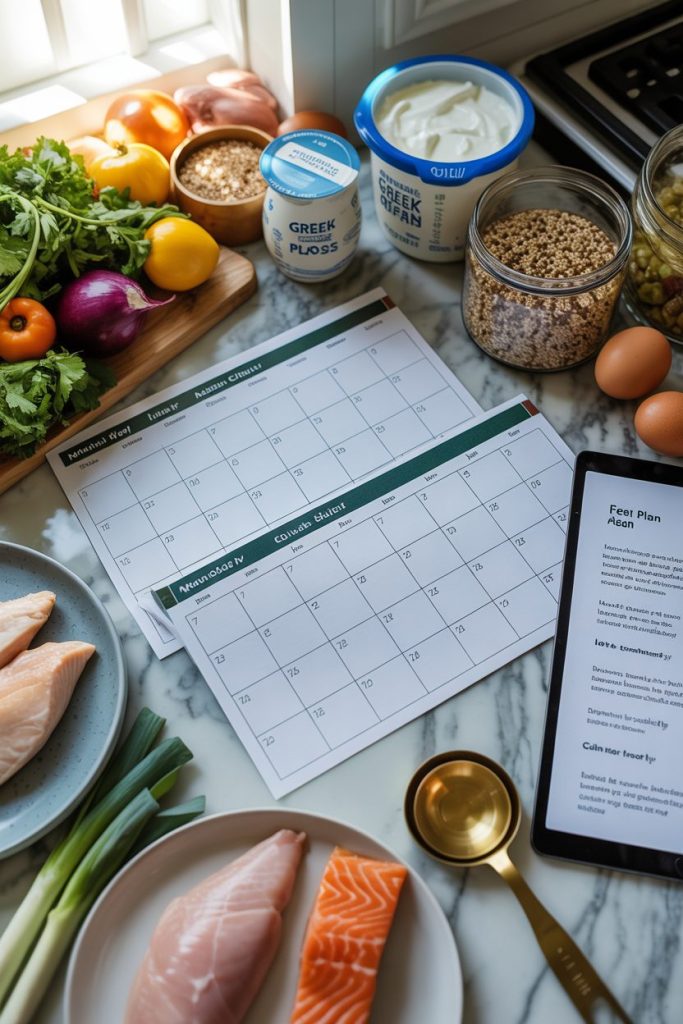
This isn’t one of those vague “eat protein and vegetables” plans that leaves you staring at the grocery store wondering what the hell you’re supposed to buy. I’ve mapped out every single meal for 14 days—breakfast, lunch, dinner, and two snacks daily.
Each day clocks in around 1400-1600 calories with 120-140 grams of protein, moderate healthy fats, and enough carbs to fuel your workouts without sabotaging your deficit. The meals rotate through different proteins and flavors so you’re not eating the same chicken breast seven days straight like some kind of fitness stereotype.
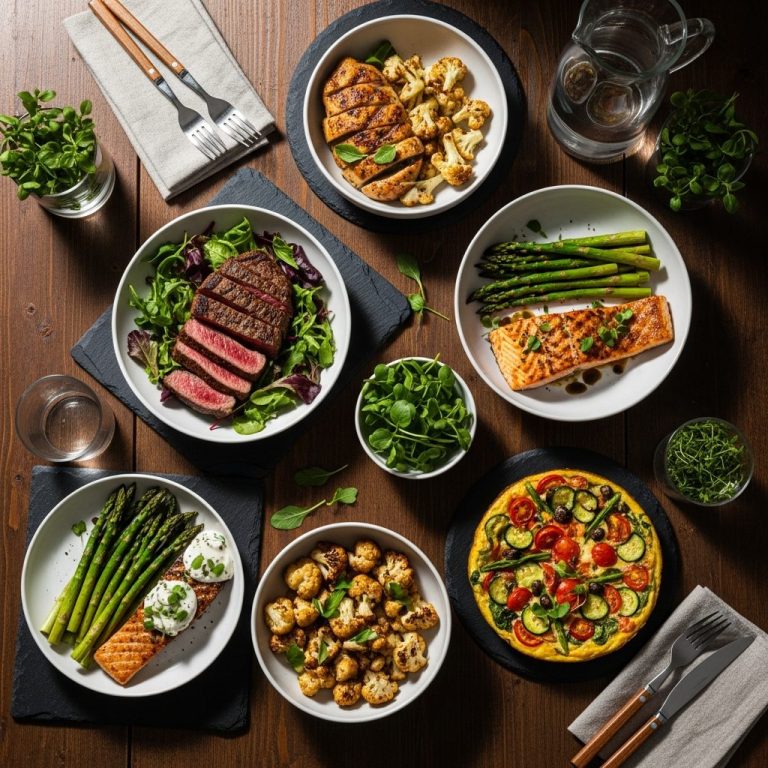
You’ll find recipes for things like protein-packed frittatas, turkey chili, grilled shrimp bowls, cottage cheese pancakes, and even a high-protein chocolate mousse that doesn’t taste like sadness. Everything’s designed to be prepared in under 30 minutes because I know you have a life outside the kitchen.
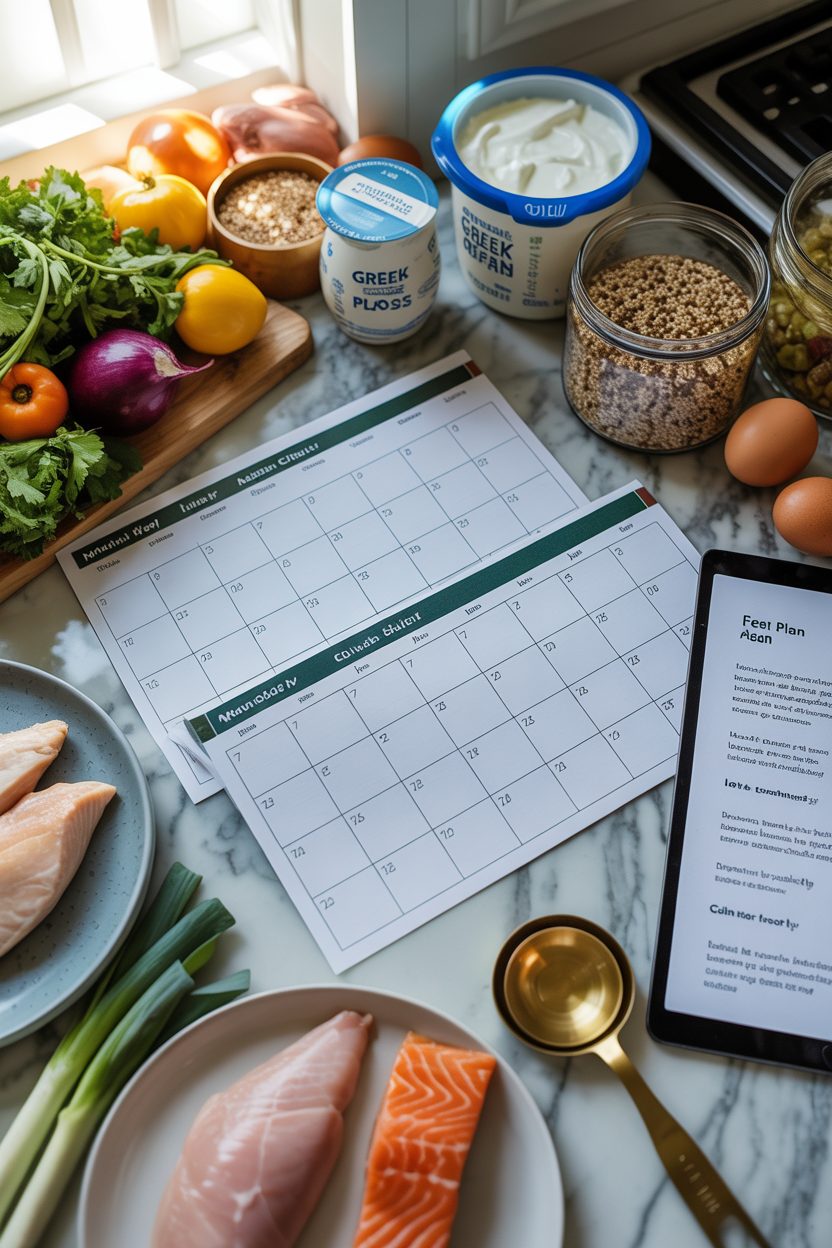
The [instant download PDF] includes the complete meal plan, shopping lists organized by week, meal prep instructions, and nutrition breakdowns for each day. Print it, stick it on your fridge, and follow it without overthinking. That’s it.
Speaking of quick protein-packed meals, you might also love [these 20-minute high-protein dinners] or [this meal prep guide for beginners]—both make getting started way less overwhelming.
Week 1: The Adjustment Phase
Days 1-3: The Rough Patch
I’m not going to sugarcoat it—the first three days are rough. Your body’s adjusting to a calorie deficit and higher protein intake, which can make you feel tired, grumpy, and hungry. You might get headaches if you’re cutting out a lot of sugar or processed foods.
Push. Through. It.
This is temporary, and by day four, you’ll feel dramatically better. In the meantime, drink more water than you think you need. Like, annoyingly more. Your kidneys process protein better with adequate hydration, and honestly, half the time we think we’re hungry, we’re just thirsty.
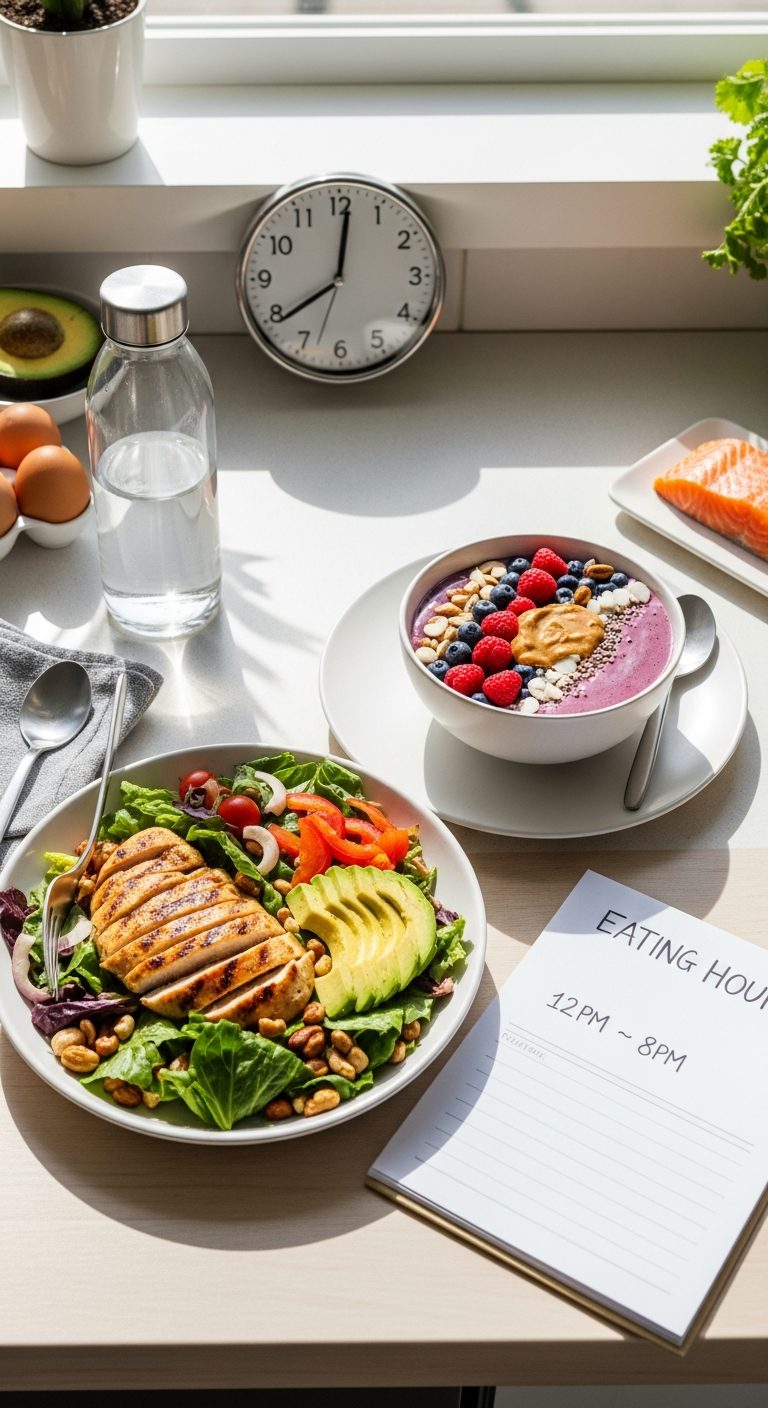
Start with meals like a veggie-packed egg scramble (6 egg whites, 2 whole eggs, loaded with spinach, peppers, and mushrooms), Greek yogurt bowls piled with berries and a scoop of protein powder, and grilled chicken salads with every vegetable in your crisper drawer. Keep it simple while you find your groove.
For snacks, hard-boiled eggs are your best friend. I batch-cook a dozen on Sunday and keep them in the fridge. Grab two with some cherry tomatoes, and you’ve got a 150-calorie snack with 12 grams of protein. I use [this egg cooker] that basically babysits them for me—set it and walk away.
Days 4-7: Finding Your Rhythm
By day four, the fog lifts. Your energy comes back, the constant hunger eases up, and you start noticing the scale moving in the right direction. This is when most people actually start to believe the plan might work.
Week one includes meals like baked salmon with asparagus (omega-3s plus quality protein), turkey meatballs over zucchini noodles (all the comfort, fraction of the carbs), and protein smoothie bowls that look Instagram-worthy and actually taste good. [Get Full Recipe] for the turkey meatballs—they’re stupidly easy and you can freeze extras.
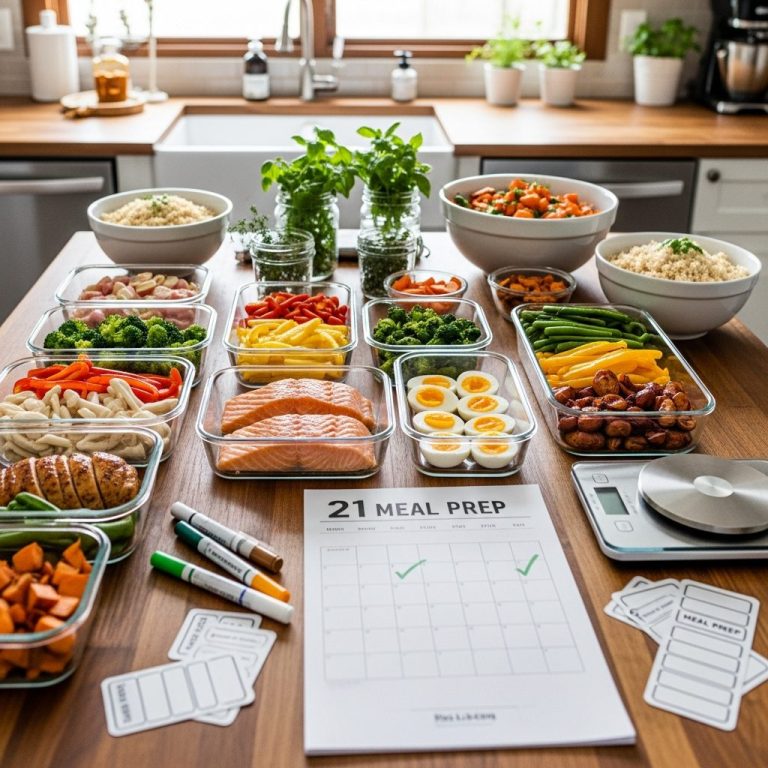
Your meal prep routine should be established by now. Dedicate two hours on Sunday to batch-cooking proteins—grill chicken breasts, bake salmon fillets, cook ground turkey. Having cooked proteins ready to go is the difference between sticking to the plan and ordering takeout when you’re tired.
I swear by [these glass meal prep containers] with dividers. You can see what’s inside (so you actually eat it), they don’t get gross like plastic, and you can reheat directly in them. Worth every penny.
Week 2: Momentum Builds
Days 8-10: The Groove
Welcome to the fun part. You’ve figured out which meals you love, your body’s adapted to the higher protein, and you’re probably down 3-4 pounds already. Clothes are fitting better. You’ve got energy. Maybe you’re even enjoying this a little?
Week two introduces new flavors to keep things interesting. Think spicy shrimp stir-fry with cauliflower rice, buffalo chicken stuffed bell peppers, and cottage cheese protein pancakes that don’t taste like cardboard. The cottage cheese pancakes are genuinely good—fluffy, satisfying, and they hold up for meal prep. [Get Full Recipe] because you’ll want to make them every week.
By now, you should have your go-to protein sources figured out. Mine are rotisserie chicken (lifesaver for busy nights), canned tuna (cheap, shelf-stable, protein bomb), frozen shrimp (defrosts in minutes), and Greek yogurt (versatile as hell). Stock these and you’ll never be caught without protein options.
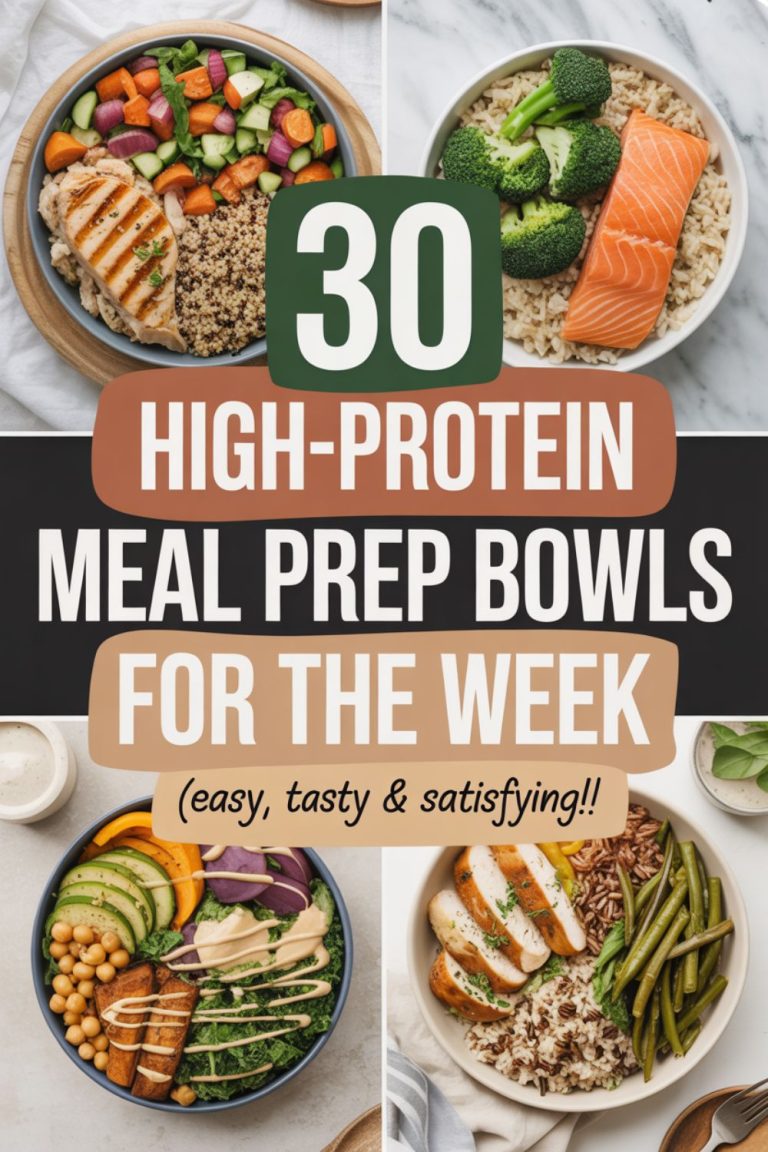
If you’re feeling ambitious, try [these high-protein meal prep bowls] or [this grilled chicken shawarma recipe] for variety. Both fit perfectly into the week-two rotation and bring serious flavor.
Days 11-14: The Home Stretch
The final four days are about finishing strong. You’re so close to completing the full 14 days, and trust me, there’s something powerful about actually finishing what you started. Your confidence gets a boost that has nothing to do with the scale.
The last few days include meals like bison burgers (leaner than beef, packed with protein), white fish tacos with cabbage slaw (light, fresh, satisfying), and protein-loaded lentil soup that makes great leftovers. Vary your protein sources throughout the week to get different amino acid profiles and prevent boredom.
By day 14, you should notice significant changes. Not just weight loss, but better sleep, clearer skin, more stable energy, and clothes that fit noticeably better. Your relationship with food probably feels different too—less chaotic, more controlled.
The Meal Prep Strategy That Makes This Work
Real talk: you can have the best meal plan in the world, but without proper prep, you’re setting yourself up to fail. I learned this the hard way after approximately 47 failed attempts at eating healthy while winging it.
The Sunday Power Hour
Dedicate one hour every Sunday to prepping for the week. This isn’t negotiable. It’s the single most important thing you’ll do for your success. Here’s my exact process:
Cook all your proteins at once. Season four chicken breasts and throw them on a [grill pan]. Bake a couple salmon fillets. Brown a pound of ground turkey. While that’s cooking, hard-boil a dozen eggs and portion out Greek yogurt into individual containers.
Wash and chop all your vegetables. Store them in clear containers so you can actually see them in your fridge. Out of sight equals forgotten vegetables that turn into science experiments by Thursday.
Pre-portion your snacks. Measure out almonds, cut vegetables with hummus, make protein energy balls. When hunger hits, grab-and-go options prevent you from making questionable decisions.
The Mid-Week Touch-Up
Wednesday night, do a quick 20-minute refresh. Check what needs to be used up, prep any proteins for Thursday-Saturday, and restock your grab-and-go snacks. This prevents the dreaded end-of-week meal prep collapse when everything runs out simultaneously.
Customizing the Plan Without Breaking It
This plan is designed for someone who needs around 1400-1600 calories for weight loss, but that might not be your number. Maybe you’re taller, more active, or have a higher metabolism. Cool—the framework still works with minor adjustments.
Need More Calories?
Add an extra snack, increase portion sizes by 25%, or include more healthy fats like avocado, nuts, or olive oil. Fats are calorie-dense, so small additions make a big difference without requiring you to eat massive volumes of food.
Keep your protein targets the same relative to your body weight. If you need 2000 calories instead of 1500, you should still be hitting 120-140 grams of protein minimum. Fill the extra calories with more vegetables and healthy fats.
Need Fewer Calories?
Cut one snack or reduce portion sizes slightly, but—and this is critical—don’t drop below 1200 calories daily. Anything less and you’re risking nutrient deficiencies, muscle loss, and metabolic adaptation that makes future weight loss harder.
Keep protein high even when cutting calories. That’s the entire point of this plan. Protein protects your muscle mass and keeps you from feeling like you’re starving. Drop the carbs or fats before you touch the protein numbers.
Vegetarian or Vegan Adjustments?
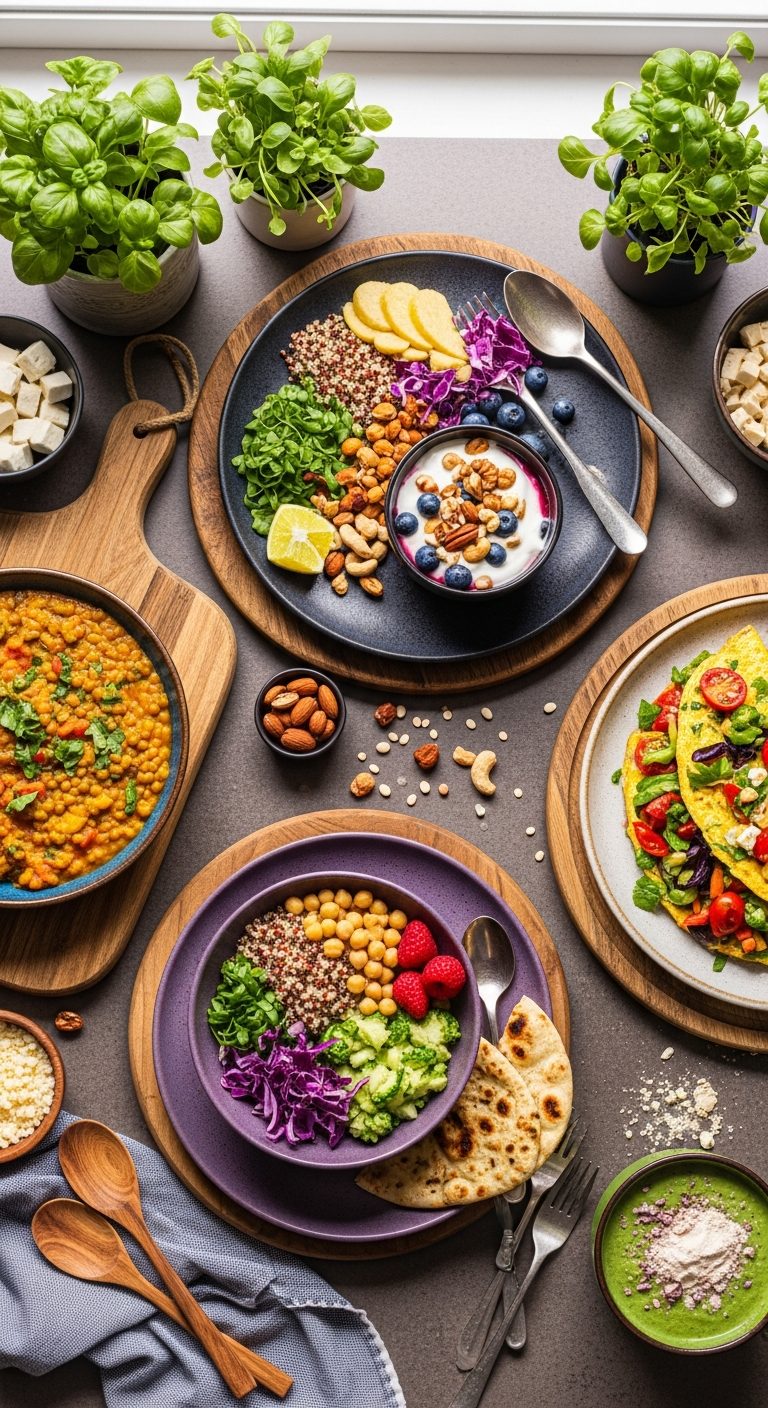
Absolutely doable. Swap animal proteins for tofu, tempeh, seitan, edamame, legumes, and plant-based protein powders. You might need slightly larger portions since plant proteins are generally less calorie-dense, but the structure remains the same.
Focus on complete proteins or combine incomplete ones. Quinoa, soy products, and hemp seeds are complete proteins on their own. Rice and beans together form a complete protein. [This plant-based protein guide] breaks down all your options if you’re going the vegetarian route.
For more plant-based inspiration, check out [these high-protein vegan meals] and [this complete vegan meal prep guide]—both translate perfectly to this 14-day framework.
What to Expect: Real Results, Real Timeline
Let’s set realistic expectations because I’m not here to sell you fairy tales. This plan works, but it’s not magic. Here’s what actually happens over 14 days when you follow this properly.
Week One Results
Expect to lose 2-4 pounds, possibly more if you have significant weight to lose. Much of this initial loss is water weight, especially if you’re cutting processed foods and sodium. That’s fine—it’s still weight loss and it makes your clothes fit better, which is motivating.
You’ll feel hungrier than usual for the first few days, then the protein kicks in and satiety improves dramatically. Energy might dip slightly mid-week as your body adjusts, but by day 6-7, it rebounds and often exceeds your baseline.
Cravings for sugar and junk food will be intense around days 3-5. This is your brain throwing a tantrum because it’s not getting its usual dopamine hits. It passes. By week two, most people report dramatically reduced cravings.
Week Two Results
Weight loss continues at 1-3 pounds for the second week. This is a healthy, sustainable rate that indicates you’re losing primarily fat while preserving muscle. Anyone promising faster results is either lying or setting you up for a metabolic crash.
This is when the visual changes become obvious. Bloating decreases, your face looks leaner, and you start seeing definition in areas that were previously… less defined. Clothes fit noticeably better. People might start asking if you’ve lost weight.
Sleep often improves. Stable blood sugar throughout the day translates to better sleep quality at night. Many people report falling asleep faster and waking up more refreshed. IMO, this is one of the most underrated benefits of high-protein eating.
According to [metabolic research on protein and weight loss], higher protein intake during calorie restriction preserves lean muscle mass significantly better than lower protein approaches, which explains why people feel and look better on this plan versus traditional low-calorie diets.
Beyond the Scale: Non-Weight Benefits
The number on the scale is obviously important—that’s why you’re here. But some of the best results from this plan have nothing to do with pounds lost.
Energy levels stabilize. No more 2 PM crashes that require caffeine IVs to survive. Protein provides steady energy without the spikes and crashes of high-carb, high-sugar diets. You’ll feel more alert and focused throughout the day.
Hunger becomes manageable. You’ll still feel hungry at appropriate times, but it’s not the ravenous, desperate hunger that makes you eat an entire sleeve of cookies standing over the kitchen sink. Protein-driven satiety is real and it changes the entire weight loss experience.
Digestion improves. All the fiber from vegetables plus adequate protein creates the ideal setup for gut health. Most people report feeling less bloated, more regular, and generally more comfortable after meals.
Skin often clears up. Cutting processed foods and sugar while increasing protein and vegetable intake can have noticeable effects on skin quality. Less inflammation, better hydration, improved nutrient intake—all of this shows up on your face.
Mood becomes more stable. Blood sugar crashes create mood crashes. Eliminate the former and you eliminate the latter. You’ll be less irritable, less anxious about food, and generally more pleasant to be around.
Troubleshooting Common Issues
Even with a solid plan, problems pop up. Here’s how to handle the most common ones without derailing your entire two weeks.
Problem: You’re Starving All the Time
First, check your protein intake. Are you actually hitting 120-140 grams daily, or are you eyeballing portions and probably eating less than you think? Get a cheap [digital food scale] and weigh your proteins for a few days. Most people underestimate portions.
Second, add more vegetables. Like, an absurd amount. Vegetables are mostly water and fiber with minimal calories. You can eat huge volumes and barely impact your calorie count. A massive salad before your main meal helps fill you up.
Third, make sure you’re drinking enough water. Aim for half your body weight in ounces minimum. Thirst often masquerades as hunger, and your kidneys need extra water to process the higher protein intake.
Problem: You’re Not Losing Weight
If you’re week one and not seeing scale movement, relax. Weight fluctuates daily based on water retention, sodium intake, hormones, and whether you’ve pooped recently. Give it the full 14 days before panicking.
If you’re week two and still nothing, you’re eating more than you think. Track your food honestly for three days—measure everything, include cooking oils and condiments, count the handful of almonds you grabbed while cooking. People consistently underestimate calorie intake by 20-30%.
Make sure you’re not overcompensating with extra snacks because “you worked out.” Exercise increases hunger, and most people eat back more calories than they burned. Stick to the planned snacks even on workout days.
Problem: You’re Bored with the Food
Seasonings are your best friend. The same grilled chicken breast tastes completely different with Italian herbs versus Cajun spices versus Asian-inspired ginger and soy. Get creative with spices and you’ll never get bored.
Switch up your cooking methods. Grill your chicken one week, bake it with different marinades the next, throw it in the slow cooker with salsa the following week. Same protein, totally different eating experience.
Try new vegetables. Most of us eat the same five vegetables on repeat. Branch out. Roasted Brussels sprouts taste nothing like steamed broccoli. Cauliflower rice is different from regular cauliflower. Variety prevents boredom.
For more flavor inspiration, try [these global spice blends for meal prep] and [this guide to cooking chicken 10 different ways]—both will rescue you from boring-meal-syndrome.
The Post-Plan Game Plan
So you’ve completed 14 days. You’re down several pounds, feeling great, and wondering what’s next. Here’s where most people screw up: they treat the end of the plan as permission to return to their old eating habits. Don’t do that.
The best approach is to gradually increase calories while maintaining high protein intake. Add 100-200 calories per day for a week and see what happens. If you maintain your weight, add another 100-200 the following week. This helps you find your maintenance calories without immediately regaining everything you lost.
Keep prioritizing protein. This shouldn’t be a temporary thing—high protein eating should become your baseline. You don’t need to be as strict about tracking, but continuing to center meals around quality protein sources will help you maintain your results.
Consider cycling back through the plan every few months as a reset. I do this quarterly when my eating habits have gotten loose and I need to tighten things up. Two weeks of structured eating gets me back on track without feeling like I’m starting from scratch.
You could also transition to a less restrictive plan like [this flexible high-protein maintenance plan] or [this 80/20 balanced eating guide] that gives you more freedom while keeping protein as your anchor nutrient.
Related Recipes You’ll Love
Looking for more ideas? Here are some recipes that pair perfectly with this plan:
More Meal Prep Solutions:
- [One-Pan High-Protein Dinners]
- [Freezer-Friendly Protein Meals]
- [30-Minute High-Protein Recipes]
Complete Plan Options:
- [7-Day High-Protein Meal Plan (1500 Calories)]
- [21-Day Weight Loss Meal Plan]
Protein-Focused Favorites:
- [Best High-Protein Snacks for Weight Loss]
Final Thoughts
Here’s what I want you to remember: this 14-day plan isn’t about perfection. It’s about consistency. Following it 80-90% of the time will get you results. Obsessing over hitting every macro perfectly and beating yourself up over a single off-plan meal? That’s the fast track to burnout.
You’re going to have days where you eat something not on the plan. Maybe your coworker brings donuts and you have one. Maybe you go out to dinner and order something delicious that’s definitely not grilled chicken and vegetables. That’s called being human. One meal doesn’t erase your progress unless you let it spiral into three days of chaos.
The goal is to finish these 14 days having proven to yourself that you can commit to something, see it through, and get results. That confidence matters more than the pounds lost because confidence is what carries you through the next phase and the one after that.
Download the [complete 14-day meal plan PDF], screenshot the grocery lists, and give yourself permission to adjust things as needed. This is a framework, not a prison sentence. Make it work for your life, your preferences, and your schedule.
Two weeks. You can do anything for two weeks. And after these 14 days, you might just surprise yourself by wanting to keep going.