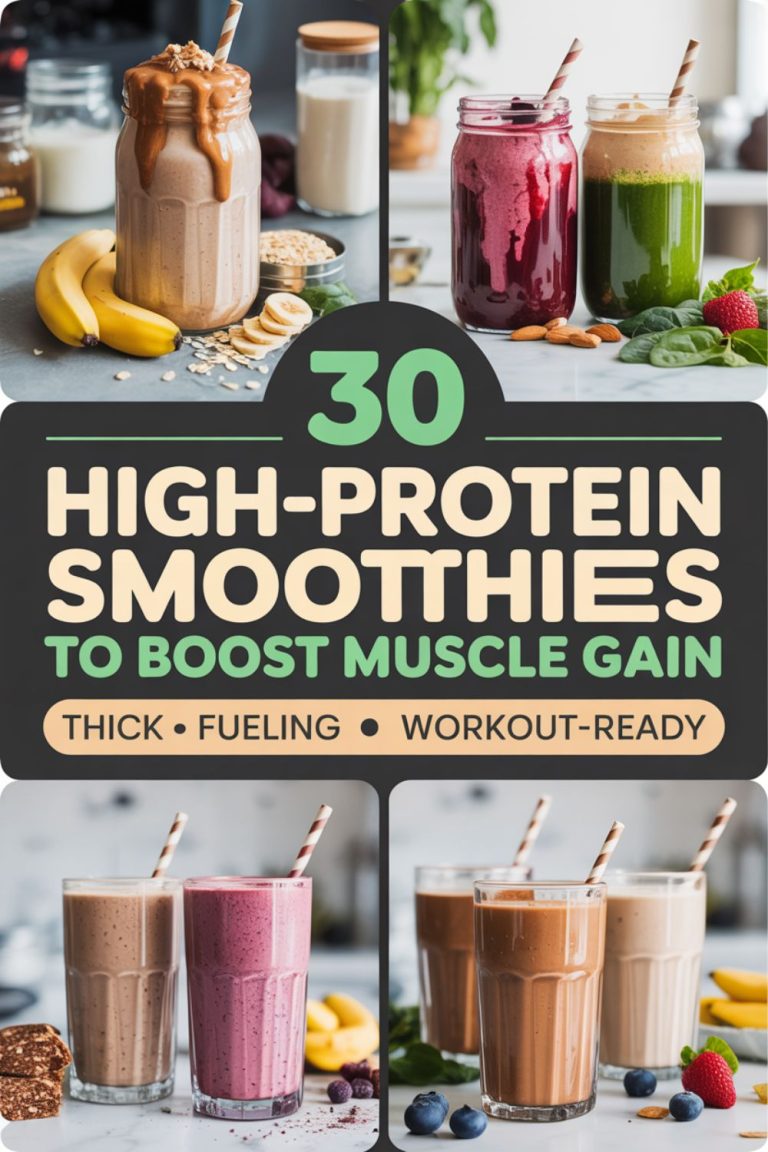
30 High-Protein Smoothies to Boost Muscle Gain
Look, I’m gonna be straight with you—if you’re chugging protein shakes that taste like chalk mixed with sadness, we need to talk. Building muscle shouldn’t mean choking down bland beverages while questioning your life choices. After years of experimenting (and some truly regrettable flavor combinations), I’ve cracked the code on smoothies that actually taste good AND help you pack on lean muscle.
These aren’t your typical “throw protein powder in milk and call it a day” recipes. We’re talking real ingredients, actual flavors, and the kind of nutrition that makes your muscles sit up and pay attention. Whether you’re trying to add mass, recover faster, or just hit your protein goals without eating another chicken breast, these 30 smoothies have your back.
Why Protein Smoothies Actually Work for Muscle Building
Here’s the deal: your muscles need protein to repair and grow. That’s not some bro-science mumbo jumbo—it’s backed by actual research from Mayo Clinic. When you lift weights, you’re creating micro-tears in your muscle fibers. Protein provides the building blocks your body needs to repair those tears and make them stronger.
But here’s where it gets interesting. According to studies, you need roughly 1.2 to 1.7 grams of protein per kilogram of body weight if you’re actively training. For a 180-pound person, that’s about 98 to 140 grams daily. Hitting that number with solid food alone? It’s doable, but it’s also a lot of meal prep and chewing.
That’s where smoothies become your secret weapon. They let you pack 30-40 grams of protein into a drinkable meal that your body can process quickly. Plus, you can sneak in fruits, healthy fats, and carbs for a complete nutritional profile. When I first started using this approach, I noticed I could hit my daily protein goals without feeling like I was force-feeding myself.
Blend your smoothie the night before and store it in the fridge. Shake it up in the morning and you’ve got breakfast ready in 30 seconds flat. Game changer for those rushed mornings.
The Science Behind Timing Your Protein Intake
Ever wondered why gym rats are so obsessed with the “anabolic window”? Turns out there’s some truth to it, though it’s not as dramatic as the supplement companies want you to believe. Research published in peer-reviewed journals shows that consuming protein after resistance training does help maximize muscle protein synthesis.
But don’t stress about chugging a shake within exactly 30 minutes of your workout. The real key is spreading your protein intake throughout the day. Your body can only use so much protein at once—somewhere around 25-40 grams per meal for most people. Anything beyond that gets converted to energy or stored as fat.
This is why I structure my smoothie routine around my training schedule. Post-workout smoothie? Absolutely. But I also use them as breakfast replacements or afternoon snacks to keep my protein intake consistent. Speaking of which, if you’re looking for more ways to hit your protein goals, check out these high-protein breakfast ideas that’ll keep you full until lunch.
What Makes a Smoothie Actually “High-Protein”?
Not all protein smoothies are created equal. Some coffee shop “protein smoothies” have maybe 10 grams of protein and 60 grams of sugar. That’s basically a milkshake with delusions of grandeur. A true high-protein smoothie should deliver at least 25-30 grams of protein per serving.
To hit that target, you’ll typically need a combination of protein powder plus additional protein-rich ingredients. I’m talking Greek yogurt, cottage cheese, nut butters, or even silken tofu. The magic happens when you layer these ingredients strategically. For instance, combining whey protein with Greek yogurt gives you both fast-acting and slow-digesting proteins—kind of like a time-release muscle-building system.
Essential Ingredients for Muscle-Building Smoothies
Let me break down the MVPs of your smoothie arsenal. These are the ingredients I keep stocked because they work, taste good, and won’t break the bank.
Protein Powder Selection
This is your foundation. Whey protein isolate is my go-to because it’s quickly absorbed and has a complete amino acid profile. If you’re lactose intolerant or vegan, pea protein or hemp protein work beautifully. Just make sure you’re getting at least 20-25 grams per scoop.
Flavor matters more than you think. Vanilla is versatile AF—it works with literally everything. Chocolate is great for dessert-style smoothies. Unflavored is clutch when you’re going savory or want the other ingredients to shine. I rotate between a premium grass-fed whey isolate and a plant-based protein blend depending on what I’m craving.
The Liquid Base
Your choice here affects both texture and nutrition. Whole milk adds creaminess and extra calories (perfect for bulking). Almond milk keeps things light. Coconut milk adds healthy fats. I usually go with unsweetened almond milk because it lets the other flavors pop without adding sugar.
For an extra protein boost, try using a high-protein milk alternative that packs 10+ grams of protein per cup. It’s a sneaky way to add protein without changing the flavor profile.
Fruits and Vegetables
Frozen fruits are your friend. They’re picked at peak ripeness, they’re cheaper than fresh, and they make your smoothie thick and cold without needing ice. Bananas add natural sweetness and potassium. Berries bring antioxidants. Spinach adds nutrients without affecting taste (seriously, you won’t taste it).
Pro move: buy a variety pack of frozen organic fruits so you can mix and match flavors without ingredients going bad. I also keep a bag of pre-washed spinach in the freezer for when I want to sneak in some greens.
Healthy Fats for Sustained Energy
Don’t skip the fats. They help with hormone production (hello, testosterone), keep you full longer, and help absorb fat-soluble vitamins. Nut butters, avocado, chia seeds, and flax seeds are all excellent choices. Just watch your portions—fats are calorie-dense.
A tablespoon of natural almond butter adds about 100 calories and 3-4 grams of protein. Chia seeds bring omega-3s and fiber. I measure these out with a set of measuring spoons because eyeballing it is how you accidentally drink 800 calories.
Meal Prep Essentials Used in This Plan
- High-Speed Blender – Seriously worth the investment. Makes everything silky smooth.
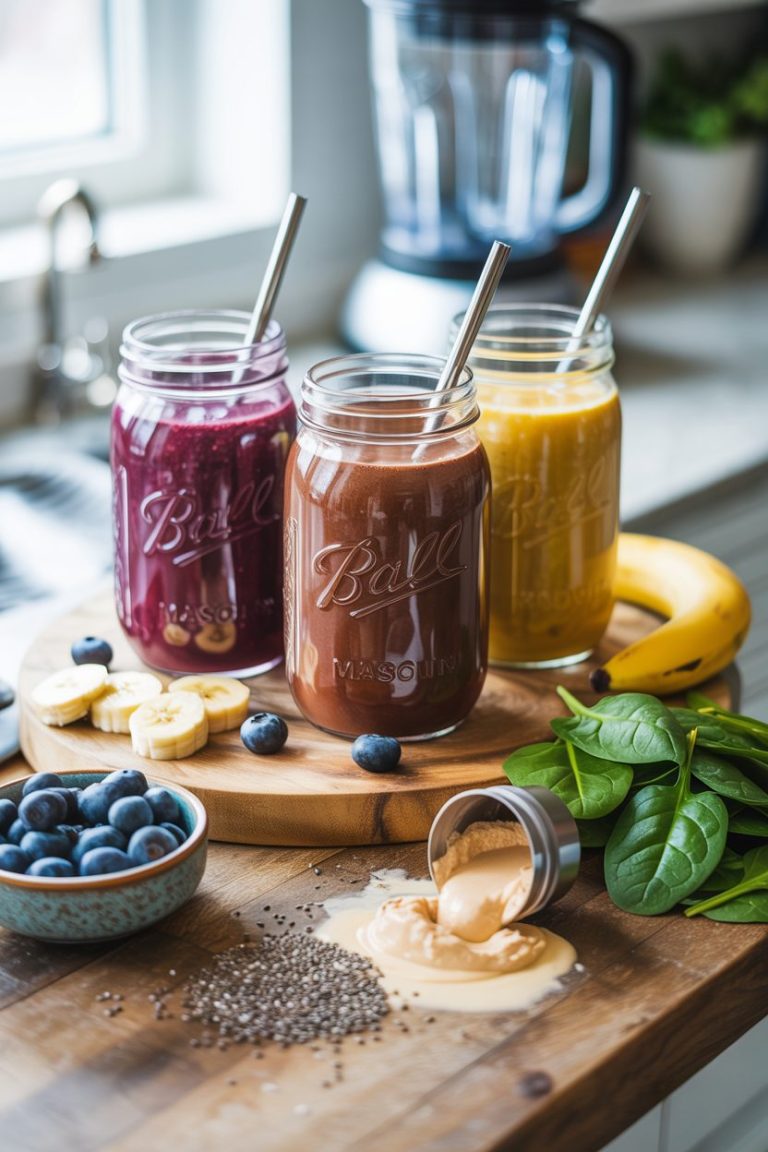
- Mason Jar Set (32oz) – Perfect for prepping smoothies ahead or taking them on the go.
- Digital Food Scale – Takes the guesswork out of portions. Accuracy matters for muscle gain.
- 7-Day High-Protein Meal Plan (1500 Calories) – PDF
- 14-Day High-Protein Weight Loss Plan – Instant Download
- 30-Day High-Protein Transformation Plan – Full PDF Bundle
The 30 High-Protein Smoothie Recipes
Alright, let’s get to the good stuff. I’ve organized these by category so you can pick based on your goals, taste preferences, and what ingredients you have on hand.
Classic Muscle-Building Smoothies
1. Chocolate Peanut Butter Power
This is the GOAT of protein smoothies. Tastes like a Reese’s cup but delivers 38g of protein. Get Full Recipe. Blend chocolate protein powder, banana, peanut butter, oats, and almond milk. The oats add complex carbs for sustained energy, and the combo of banana + peanut butter is chef’s kiss.
2. Vanilla Berry Blast
When you want something lighter but still effective. Mixed berries, vanilla protein, Greek yogurt, and a splash of orange juice. Comes out to about 32g protein and the vitamin C from the berries helps with muscle recovery. The Greek yogurt adds a tangy kick that balances the sweetness perfectly.
3. Cookies and Cream Delight
Yeah, it sounds indulgent, but it works. Vanilla protein, cottage cheese, crushed chocolate cookies (the healthy kind), and milk. You’re getting casein protein from the cottage cheese, which digests slowly—perfect before bed. Around 35g protein and it legitimately tastes like dessert.
4. Banana Bread Smoothie
All the flavor of fresh banana bread without turning on the oven. Banana, vanilla protein, cinnamon, nutmeg, walnuts, and oat milk. The walnuts add omega-3s and a nice crunch if you don’t blend them completely. Toast them first in a small countertop oven for extra flavor depth. Delivers 30g protein.
5. Coffee Protein Kickstart
For when you need caffeine and gains in the same glass. Cold brew coffee, chocolate or vanilla protein, frozen banana, and a splash of cream. The caffeine can actually enhance workout performance—just don’t overdo it. About 28g protein plus the energy boost you need for morning training sessions.
Green Smoothies That Don’t Suck
6. Tropical Green Machine
Spinach, mango, pineapple, vanilla protein, coconut milk. The tropical fruits completely mask the spinach taste while you sneak in a serving of vegetables. This one’s super refreshing post-workout. Around 28g protein.
7. Mint Chocolate Chip
Sounds weird, tastes incredible. Fresh mint, spinach, chocolate protein, banana, and cacao nibs. The mint makes it taste like ice cream. The cacao nibs add antioxidants and a slight crunch. 32g protein and feels like a treat.
8. Green Apple Pie
Spinach, green apple, vanilla protein, cinnamon, oats, and a touch of maple syrup. Tastes exactly like apple pie but with 30g of protein. The apple adds natural sweetness and fiber. Blend it with a high-powered blender to get it perfectly smooth.
If you’re into green smoothies but want more variety, you might also dig these high-protein vegetarian meals that prove you don’t need meat to build muscle.
Fruit-Forward Protein Bombs
9. Strawberry Cheesecake
Strawberries, cream cheese (yes, really), vanilla protein, and graham cracker crumbs. This is borderline criminal how good it tastes. The cream cheese makes it ridiculously creamy and adds extra protein. About 35g total.
10. Peach Cobbler
Frozen peaches, vanilla protein, Greek yogurt, cinnamon, and a hint of almond extract. Tastes like summer in a glass. The yogurt adds probiotics for gut health while bumping the protein to 33g. Mix it up in a personal blender for easy single servings.
11. Blueberry Muffin
Blueberries, vanilla protein, oats, almond butter, and cinnamon. The oats give it that muffin-like thickness. Blueberries are packed with antioxidants that help reduce exercise-induced muscle damage. 31g protein.
12. Mango Lassi Protein
Inspired by the Indian yogurt drink but turbocharged with protein. Mango, vanilla protein, Greek yogurt, cardamom, and a pinch of saffron if you’re fancy. Exotic flavor profile and 36g of protein. The cardamom is optional but adds authentic lassi vibes.
Freeze leftover smoothie in ice cube trays. Next time, throw the cubes in a blender with a splash of liquid for instant smoothie. Saves time and reduces waste.
Decadent Dessert-Style Smoothies
13. Salted Caramel Protein
Dates, vanilla protein, sea salt, caramel extract, and almond milk. The dates provide natural sweetness and blend into a caramel-like flavor. This tastes so good you’ll forget it’s good for you. 29g protein.
14. Red Velvet Cake
Beets, chocolate protein, cream cheese, vanilla extract, and cocoa powder. The beets give it that signature red velvet color and add nutrients. Tastes surprisingly legit. 34g protein and the beets bring nitric oxide benefits for better blood flow during workouts.
15. Tiramisu
Espresso, mascarpone cheese, vanilla protein, cocoa powder, and a splash of coffee liqueur extract (non-alcoholic). Italian dessert meets protein shake. Absolutely divine and packing 37g of protein.
16. Pumpkin Spice Protein
This isn’t just for fall, FYI. Pumpkin puree, vanilla protein, pumpkin spice blend, Greek yogurt, and maple syrup. The pumpkin adds vitamin A and fiber. 32g protein and tastes exactly like pumpkin pie.
Recovery-Focused Smoothies
17. Cherry Chocolate Recovery
Tart cherry juice, chocolate protein, banana, and spinach. Johns Hopkins research notes that tart cherry juice can help reduce post-workout inflammation. This combo is perfect after heavy leg day. 30g protein.
18. Turmeric Golden Milk Protein
Turmeric, black pepper, vanilla protein, coconut milk, honey, and ginger. Anti-inflammatory powerhouse. The black pepper helps your body absorb the turmeric’s beneficial compounds. 28g protein and serious recovery benefits.
19. Blueberry Beet Recovery
Blueberries, cooked beets, vanilla protein, and coconut water. Both ingredients are known for aiding muscle recovery. The coconut water replenishes electrolytes. 29g protein and it’s naturally hydrating.
For more recovery strategies, these 40 high-protein meal prep ideas can help you stay on track even during your busiest weeks.
Savory Protein Smoothies (Trust Me)
20. Green Goddess
Avocado, spinach, cucumber, unflavored protein, lemon juice, and herbs. Yes, it’s savory. Yes, it’s weird at first. But it’s incredibly refreshing and the avocado makes it creamy AF. 27g protein and super nutrient-dense.
21. Tomato Basil Protein
Tomatoes, basil, unflavored protein, Greek yogurt, garlic powder, and a pinch of sea salt. It’s basically drinkable bruschetta. Sounds crazy, tastes amazing. 31g protein and perfect for when you’re sick of sweet smoothies.
High-Calorie Mass Gainers
22. Peanut Butter & Jelly Bulk
Peanut butter, strawberries, oats, protein powder, whole milk, and honey. This bad boy clocks in around 650 calories and 40g protein. Perfect for hardgainers who struggle to eat enough.
23. Chocolate Peanut Butter Banana Bulk
Double the peanut butter, two bananas, chocolate protein, whole milk, and granola on top. Around 750 calories, 45g protein. This is my go-to when I’m trying to add mass. Prepare it in a large capacity blender because it makes a lot.
24. Oatmeal Cookie Mass Builder
Cooked oatmeal, vanilla protein, almond butter, raisins, cinnamon, and whole milk. Tastes like oatmeal cookies, delivers 700+ calories and 42g protein. The cooked oatmeal makes it super thick and filling.
Low-Carb, High-Protein Options
25. Chocolate Avocado Low-Carb
Avocado, chocolate protein, unsweetened almond milk, cocoa powder, and stevia. Only about 8g net carbs but 32g protein. The avocado provides healthy fats that keep you satisfied for hours.
26. Vanilla Almond Low-Carb
Vanilla protein, almond butter, heavy cream, unsweetened almond milk, and sugar-free vanilla syrup. Around 10g net carbs, 35g protein. Tastes decadent despite being low-carb. Perfect for those following a ketogenic approach.
27. Berry Cheesecake Keto
Mixed berries (measured carefully), cream cheese, vanilla protein, MCT oil, and unsweetened almond milk. About 12g net carbs, 33g protein. The MCT oil provides quick energy without carbs.
Looking for more low-carb options? Check out these 27 low-carb high-protein dinners that’ll keep you in ketosis while building muscle.
Pre-Workout Energy Smoothies
28. Espresso Chocolate Pre-Workout
Double shot of espresso, chocolate protein, banana, and a pinch of sea salt. The caffeine primes you for training, the banana provides quick carbs, and the salt helps with hydration. 30g protein plus that caffeine kick.
29. Green Tea Matcha Power
Matcha powder, vanilla protein, banana, spinach, and coconut water. Matcha provides sustained energy without the crash. The combination gives you focus and 28g of protein to fuel your workout.
30. Beetroot Performance Booster
Cooked beets, vanilla protein, mixed berries, and coconut water. Beets can improve exercise performance through increased nitric oxide production. 29g protein and natural performance enhancement.
Tools & Resources That Make This Easier
- Reusable Smoothie Straws – Eco-friendly and they actually make a difference in the drinking experience.
- Protein Powder Funnel – Sounds unnecessary until you spill protein powder everywhere. Then it’s essential.
- Portable Blender Bottle – For when you need to shake up a quick protein drink on the go.
- 21-Day High-Protein Meal Prep Challenge – Printable Guide
- 14-Day High-Protein Muscle Gain Meal Plan – Printable
- 7-Day High-Protein Vegetarian Meal Plan – Printable PDF
Making Smoothies Work for YOUR Goals
Here’s where most people mess up: they treat all smoothies the same regardless of their specific goals. A smoothie for bulking should look different than one for cutting. A pre-workout smoothie has different requirements than a before-bed recovery drink.
If you’re trying to add mass, focus on the higher-calorie options with more carbs and healthy fats. Think smoothies #22-24. If you’re cutting while trying to maintain muscle, lean toward the lower-carb, higher-protein versions like #25-27. The protein stays high across the board—it’s the carbs and fats you adjust based on your goals.
IMO, the biggest mistake I see is people using smoothies to replace every meal. That’s not the move. Use them strategically—post-workout, as breakfast when you’re rushed, or as a between-meal protein boost. But also eat real, whole foods. Your body needs variety and different nutrient profiles. These 21 high-protein meals can round out your nutrition plan perfectly.
Troubleshooting Common Smoothie Problems
Too Thick? Add more liquid gradually. Start with a quarter cup at a time until you reach your desired consistency. Too thin is worse than too thick—you can’t take liquid back out.
Too Sweet? Add a pinch of salt or a squeeze of lemon juice. Both cut through excessive sweetness without changing the flavor profile dramatically. Alternatively, throw in a handful of spinach to dilute the sweetness naturally.
Protein Powder Clumping? Blend your liquid and other ingredients first, then add protein powder last and pulse it in. Or mix the protein powder with a small amount of liquid separately before adding to the blender. Trust me, this saves so much frustration.
Not Filling Enough? Add oats, chia seeds, or avocado. These ingredients add substance and healthy calories while slowing digestion, which keeps you fuller longer. A tablespoon of chia seeds absorbs liquid and expands in your stomach.
If your smoothie separates after sitting, that’s totally normal. Just shake or stir it before drinking. Or use a mason jar with a lid and give it a good shake.
The Role of Supplements Beyond Protein Powder
While protein powder is the star, a few other supplements can take your muscle-building smoothies to the next level. Creatine monohydrate is probably the most well-researched supplement for muscle growth. You can add 5g to any smoothie without affecting the taste.
BCAAs (branched-chain amino acids) can help reduce muscle soreness, though if you’re already getting enough protein, they’re optional. Collagen powder adds extra protein and supports joint health—particularly useful if you’re lifting heavy regularly.
Just don’t go overboard. The supplement industry loves to make you think you need seventeen different powders. You don’t. Quality protein powder, maybe creatine, real food, and consistent training will get you 95% of the way there. For a complete nutrition strategy, pair these smoothies with a solid meal plan like this 7-day high-protein intermittent fasting plan.
Real Talk About Meal Replacement Smoothies
Can you replace meals with smoothies? Sure. Should you replace every meal? Hell no. Your body needs the mechanical action of chewing—it helps with satiety and digestion. Plus, there’s something satisfying about actually eating food that you miss out on with an all-liquid diet.
I use smoothies to replace breakfast maybe 4-5 times a week because mornings are chaos. But lunch and dinner? Those are sit-down meals with actual food on a plate. The smoothies support my nutrition goals; they don’t define them.
That said, if you’re in a pinch and need a complete meal in smoothie form, make sure it has protein, healthy fats, complex carbs, and fiber. Add oats for carbs, nut butter for fats, protein powder for obvious reasons, and fruits or vegetables for fiber and micronutrients. A complete smoothie meal should be 400-600 calories depending on your needs.
Cost-Effective Smoothie Strategies
Let’s be real—protein powder and fresh ingredients add up. Here’s how to keep costs reasonable without sacrificing quality.
Buy frozen fruits in bulk when they’re on sale. They last months in the freezer and you won’t waste any. Generic store-brand Greek yogurt is often just as good as name brands. Watch for sales on protein powder—I stock up when my preferred brand goes on sale.
Make your own nut butters in a food processor. Buy nuts in bulk, blend them up, and you’ve got fresh nut butter for half the price. Oats are dirt cheap and versatile. A big container of old-fashioned oats costs like three bucks and lasts forever.
Skip the fancy superfoods unless you actually use them consistently. Acai and goji berries are great, but frozen blueberries provide similar benefits at a fraction of the cost. Don’t buy twelve different protein powders—find two or three you like and stick with them.
Advanced Smoothie Strategies for Serious Lifters
Once you’ve mastered the basics, here’s how to optimize further. Intra-workout nutrition can make a difference for sessions longer than 90 minutes. Blend a simple smoothie with protein, fast-digesting carbs (like banana or honey), and water. Sip it during your workout to maintain energy and prevent muscle breakdown.
Before-bed smoothies can support overnight muscle recovery. Focus on slow-digesting proteins like casein (found in cottage cheese) and skip the simple carbs unless you’re bulking hard. A bedtime smoothie with cottage cheese, frozen berries, and a scoop of protein keeps amino acids circulating while you sleep.
Carb cycling with smoothies is actually pretty simple. High-training days get carb-heavy smoothies with oats, bananas, and honey. Rest days get lower-carb versions with more fats and fewer fruits. This approach helps you fuel hard workouts without excess calories on rest days. If you’re serious about body recomposition, combine this strategy with these 25 high-protein dinners for fat loss.
Adapting Smoothies for Special Diets
Dairy-Free: Use plant-based protein powder, coconut yogurt, and non-dairy milk. Nutritional profile stays similar with the right substitutions.
Vegan: Pea protein, hemp protein, or rice protein work great. Add nut butters, seeds, and plant-based milk. You can hit 30+ grams of protein easily without any animal products. These 20 high-protein vegetarian meals can complement your vegan smoothie routine.
Keto: Focus on recipes #25-27 or adapt others by removing high-carb fruits and adding MCT oil or heavy cream. Keep net carbs under 15g per smoothie.
Paleo: Use compliant protein powders (egg white or beef protein), avoid dairy, stick to fruits and vegetables with healthy fats from nuts and seeds.
Gluten-Free: Most smoothie ingredients are naturally gluten-free. Just check your protein powder and oats (get certified gluten-free oats if celiac is a concern).
Creating Your Personal Smoothie Rotation
Don’t try to master all 30 recipes at once. Start with 3-5 that appeal to you based on ingredients you already have. Make each one twice to dial in your preferred consistency and sweetness level. Once those are dialed in, add a few more to your rotation.
I personally rotate between about 7-8 different smoothies depending on what’s in my fridge and what I’m craving. Some weeks I’m all about the chocolate peanut butter combo. Other weeks I want something lighter and fruitier. Listen to your body and what sounds good—you’re more likely to stick with it if you actually enjoy drinking it.
Keep a notes app on your phone with your favorite modifications. I’ve got notes like “Strawberry Cheesecake – use half the cream cheese” or “Green Machine – add extra mango.” These little adjustments make recipes truly yours and ensure you’ll want to make them repeatedly.
For comprehensive meal planning that includes smoothies as part of a complete nutrition strategy, check out this 7-day high-protein meal plan for women over 40 or this 7-day high-protein low-carb meal plan depending on your specific goals.
Frequently Asked Questions
Do I really need protein powder for muscle-building smoothies?
Not technically, but it makes hitting protein targets way easier. You can make high-protein smoothies using Greek yogurt, cottage cheese, and nut butters, but you’d need significantly larger portions to match what one scoop of protein powder provides. Protein powder is just concentrated protein—nothing magical about it, but it’s convenient AF.
When is the best time to drink a protein smoothie?
The “anabolic window” isn’t as critical as people think, but post-workout is solid timing. That said, total daily protein intake matters more than specific timing. I drink smoothies whenever they fit my schedule—breakfast, post-workout, or as an afternoon snack. As long as you’re hitting your daily protein goals, you’re good.
Can I meal prep smoothies for the whole week?
Yes, with caveats. Prep individual smoothie bags with all ingredients except liquid, freeze them, then blend when ready. Or blend the night before and store in the fridge for next day—just shake well before drinking. Frozen smoothies last 3-4 days in the freezer before quality degrades. Don’t prep more than that at once.
Will drinking protein smoothies make me gain weight?
Only if you’re in a calorie surplus. Smoothies themselves don’t cause weight gain—excess calories do. If you’re trying to lose fat, use lower-calorie smoothies and count them toward your daily calorie target. If you’re trying to gain muscle, use higher-calorie versions. The protein helps with muscle maintenance/growth regardless of your goal.
Are smoothies better than eating solid food for muscle gain?
No, they’re not better—they’re just easier in certain situations. Whole foods provide more satiety, require chewing (which affects digestion and satisfaction), and often contain more fiber. Use smoothies as a tool in your nutrition arsenal, not a replacement for actual meals. Balance is key.
Final Thoughts: Making It Sustainable
Look, muscle building is a marathon, not a sprint. These smoothies work because they make consistent protein intake effortless. You don’t need to nail perfect nutrition every single day—you just need to be consistent over time.
Start with 2-3 smoothies per week. Get comfortable with the process. Experiment with flavors. Find what works for your schedule and taste preferences. Once it becomes habit, you’ll wonder how you ever tried to build muscle without them.
The beauty of smoothies is they’re adaptable. Broke? Use cheaper ingredients. Rushed? Prep bags ahead. Bored? Swap flavors. Don’t like something? Leave it out or substitute. There’s no perfect recipe—only the one you’ll actually make consistently.
And remember: the best protein smoothie is the one you’ll drink regularly. Taste matters. Convenience matters. If a smoothie ticks those boxes while hitting your macros, that’s your winner. Everything else is just noise.
Now stop reading, pick a recipe, and go blend something. Your muscles are waiting.