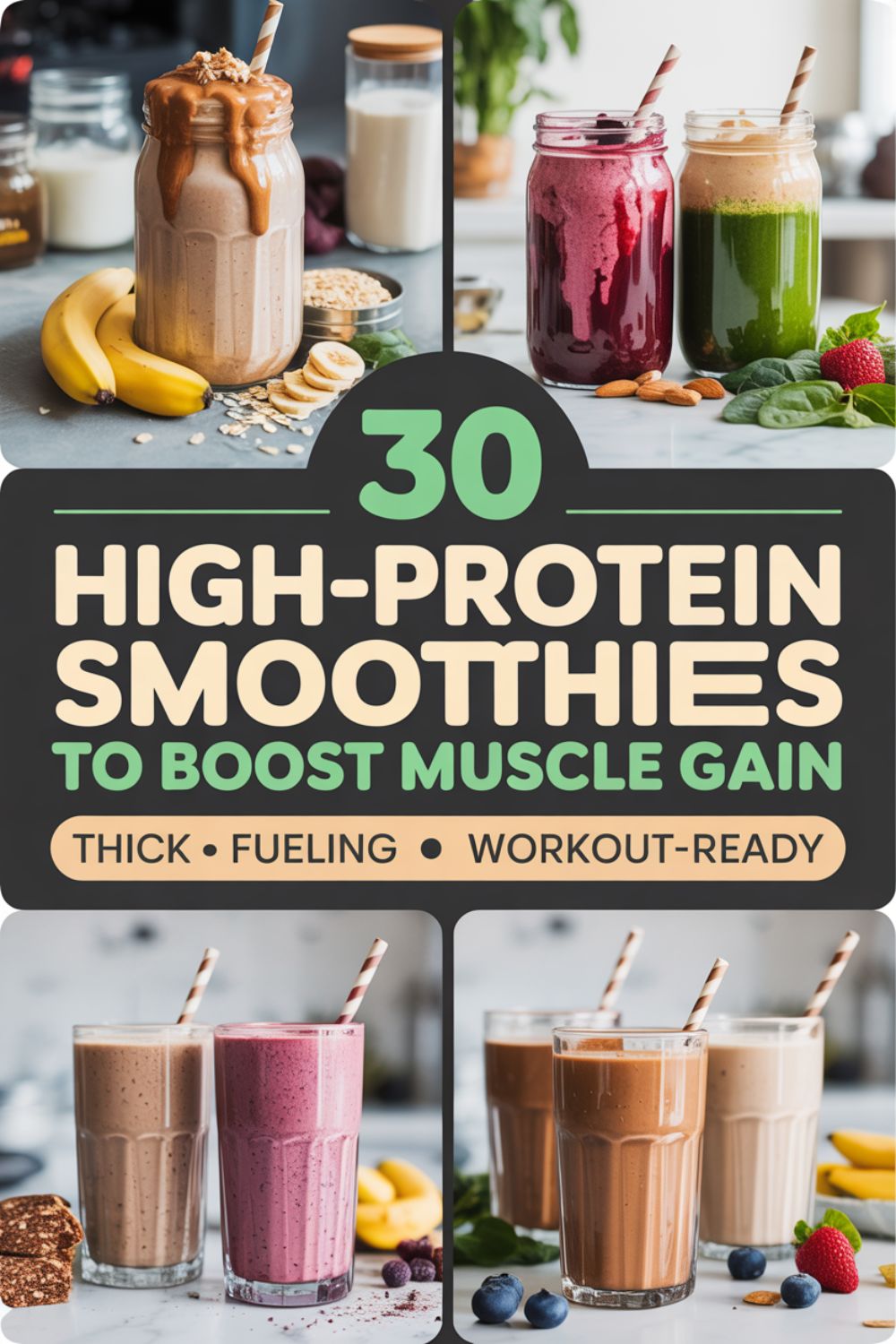
30 High-Protein Smoothies to Boost Muscle Gain
Look, I’m gonna level with you—if you’ve been forcing down another bland chicken breast at 6 AM or choking on chalky protein bars that taste like cardboard dipped in sadness, we need to talk. Building muscle doesn’t mean you have to suffer through meals that make you question your life choices.
High-protein smoothies changed everything for me. We’re talking about actual food that tastes good, goes down easy, and packs the protein punch your muscles are begging for after crushing those weights. No more meal prep anxiety at midnight. No more dry heaving over your fourth egg white of the day.
What I’ve learned through way too much trial and error (and a blender that’s seen some things) is that muscle gain isn’t just about chugging protein shakes that taste like chemicals. It’s about finding combinations that work with your body, your taste buds, and your actual human schedule. These 30 smoothies aren’t some random internet list—they’re battle-tested recipes that deliver 25-40 grams of protein per serving without making you want to give up on fitness entirely.
Why Protein Smoothies Actually Work for Muscle Building
Here’s the thing nobody tells you when you start lifting—your muscles don’t grow in the gym. They grow when you’re sitting on your couch, scrolling through your phone, or sleeping. The actual muscle repair and growth happens during recovery, and that process needs one critical ingredient: protein.
According to research from Mayo Clinic, people who regularly lift weights need about 1.2-1.7 grams of protein per kilogram of body weight. For a 180-pound person, that’s roughly 98-140 grams daily. Sounds doable until you realize that’s like eating six chicken breasts or chugging eight glasses of milk.
This is where smoothies become your secret weapon. A well-built smoothie delivers 30-50 grams of protein in one drinkable meal that doesn’t leave you feeling like you swallowed a bowling ball. Plus—and this is huge—liquid calories don’t trigger the same fullness response as solid food. You can drink a 600-calorie smoothie and be ready to eat again in 90 minutes, which is perfect when you’re trying to hit those muscle-building macros.
Pro Tip: Blend your protein powder with frozen fruit first, then add liquids gradually. This prevents that chalky clumping thing that makes smoothies taste like punishment.
The Science Behind Timing Your Protein
Ever heard someone at the gym screaming about the “anabolic window”? Well, they’re not completely wrong, but they’re also not completely right. Recent studies show that protein timing matters, but not in the dramatic 30-minute-or-your-gains-disappear way that fitness bros love to preach.
What actually matters is consistent protein distribution throughout the day. Research published in the journal Nutrients suggests consuming 15-30 grams of protein per meal, spread across 4-5 meals daily, maximizes muscle protein synthesis. Your body can only use so much protein at once—dump 80 grams in one sitting and you’re basically making expensive urine.
My strategy? Morning smoothie right after waking up (your body’s been fasting all night), post-workout smoothie within two hours of training, and sometimes an evening smoothie if I’m short on protein for the day. This approach keeps me consistently fueled without that stuffed-turkey feeling that comes from forcing down massive meals.
Speaking of post-workout nutrition, you might also want to check out these high-protein breakfast ideas that work perfectly as morning fuel, or browse through these delicious high-protein meals for when you want solid food instead of liquid nutrition.
Building the Perfect Muscle-Gain Smoothie
Not all smoothies are created equal, and throwing random ingredients into a blender hoping for gains is a recipe for disappointment (and probably digestive distress). A proper muscle-building smoothie needs three key components working in harmony.
The Protein Foundation
This is your base, your anchor, your reason for making the damn thing. You’ve got options:
- Whey protein: Fast-absorbing, complete amino acid profile, mixes smooth. The classic choice for post-workout. I use this grass-fed whey isolate because it doesn’t taste like chemicals and actually dissolves.
- Plant-based protein: Pea, rice, or hemp protein for the dairy-free crowd. Mix pea and rice together for a complete amino acid profile. This organic pea protein blend is my go-to when my stomach’s being sensitive.
- Greek yogurt: Thick, creamy, packed with protein and probiotics. About 20 grams per cup. Makes everything taste like dessert.
- Cottage cheese: Don’t knock it ’til you try it. Blends smooth and adds serious creaminess with minimal flavor impact.
Smart Carbohydrates for Energy
Carbs aren’t the enemy—they’re what gives you the energy to actually lift heavy things. Plus, they trigger insulin release, which helps shuttle nutrients into your muscle cells. Think of carbs as the delivery truck for your protein.
- Bananas: Natural sweetness, potassium for muscle function, creamy texture. Freeze them for milkshake vibes.
- Oats: Slow-burning energy, fiber for gut health, makes smoothies thick and satisfying. I toss rolled oats in dry before blending—they grind up perfectly.
- Berries: Lower sugar than other fruits, loaded with antioxidants that help with muscle recovery.
- Dates: Natural sweetener that won’t spike your blood sugar like honey. Two dates add about 30 grams of carbs.
Healthy Fats for Hormone Production
Fats slow down digestion (good for sustained energy) and support testosterone production (very good for muscle growth). Don’t skip them just because some diet guru on Instagram said fat makes you fat.
- Nut butters: Peanut, almond, cashew—pick your poison. Two tablespoons add about 200 calories and make everything taste amazing. This natural almond butter has zero added junk.
- Avocado: Sounds weird, tastes like nothing, makes smoothies incredibly creamy. Quarter to half an avocado works perfectly.
- Chia seeds: Omega-3s, fiber, and they thicken your smoothie naturally. Let them sit in your liquid for five minutes before blending.
- Coconut oil or MCT oil: Quick energy, brain fuel, smooth texture. Start with one teaspoon or you’ll be running to the bathroom.
If you’re looking for more structured meal options to pair with these smoothies, check out these 40 high-protein meal prep ideas that’ll keep you fueled all week. Get Full Recipe
30 High-Protein Smoothie Recipes That Actually Taste Good
Alright, let’s get to the good stuff. I’ve organized these by flavor profile because nobody wants to scroll through 30 random recipes trying to figure out what sounds appealing. Each recipe hits that 25-40 gram protein sweet spot and can be customized based on what’s in your kitchen.
Chocolate Lovers’ Collection
1. Classic Chocolate Peanut Butter Power
- 1 scoop chocolate protein powder (25g protein)
- 2 tbsp natural peanut butter
- 1 frozen banana
- 1 cup unsweetened almond milk
- 1 tbsp cacao nibs
- Ice to thicken
This is the gateway smoothie—the one that converts skeptics into believers. Tastes like a Reese’s cup, delivers 35 grams of protein, and takes maybe 90 seconds to make. I literally make this five times a week.
2. Mocha Morning Kickstart
- 1 scoop chocolate whey protein
- 1 shot cold brew coffee (or 1/2 cup strong brewed coffee, cooled)
- 1/2 cup Greek yogurt
- 1 frozen banana
- 1 tsp instant espresso powder
- Dash of cinnamon
Coffee and gains in one glass. The Greek yogurt makes it thick enough to eat with a spoon, and the caffeine means you’ll actually want to go to the gym instead of Netflix. Around 38 grams of protein plus enough caffeine to make mornings tolerable.
3. Chocolate Cherry Recovery
- 1 scoop chocolate protein
- 1 cup frozen cherries
- 1/2 cup cottage cheese (trust me)
- 1 tbsp cacao powder
- 1 cup unsweetened coconut milk
Cherries contain compounds that reduce muscle soreness and inflammation after training. The cottage cheese disappears completely when blended, leaving just creamy texture and 32 grams of protein. Perfect post-leg-day when walking is optional.
Quick Win: Buy frozen fruit instead of fresh. It’s pre-washed, always ripe, cheaper, and makes your smoothies cold without watering them down with ice. Your future self will thank you.
4. Chocolate Mint Chip
- 1 scoop vanilla or chocolate protein
- 2 cups fresh spinach (you won’t taste it)
- 1 frozen banana
- 1/4 tsp peppermint extract
- 1 tbsp cacao nibs
- 1 cup milk of choice
Sneaky vegetables disguised as dessert. The spinach adds iron and folate without affecting the minty-chocolate flavor. 28 grams of protein and probably the only way I eat greens before noon.
5. Dark Chocolate Almond
- 1 scoop chocolate protein powder
- 2 tbsp almond butter
- 1 frozen banana
- 2 tbsp unsweetened cocoa powder
- 1/4 cup oats
- 1 cup almond milk
- Pinch of sea salt
The oats make this incredibly filling—one smoothie keeps me satisfied for 3-4 hours easy. The sea salt amplifies the chocolate flavor in this weird magical way. 36 grams of protein and tastes expensive.
Berry Blast Options
6. Mixed Berry Protein Blast
- 1 scoop vanilla protein powder
- 1 cup mixed frozen berries
- 1/2 cup Greek yogurt
- 1 tbsp chia seeds
- 1 cup coconut water
- Handful of spinach
Light, refreshing, and packed with antioxidants that fight exercise-induced inflammation. The chia seeds expand and make you feel full for hours. 31 grams of protein and tastes like summer.
7. Strawberry Cheesecake Dream
- 1 cup frozen strawberries
- 1/2 cup cottage cheese
- 1 scoop vanilla protein
- 1 tbsp cream cheese (seriously)
- 1 tsp vanilla extract
- Splash of milk
This smoothie has no business being this good for you while tasting like actual cheesecake. The cottage cheese and cream cheese combo creates this rich, dessert-like texture. 35 grams of protein and zero guilt.
For more high-protein meal inspiration beyond smoothies, these 25 high-protein dinners are perfect for when you need something more substantial in the evening.
8. Blueberry Muffin Muscle Builder
- 1 scoop vanilla protein
- 1 cup frozen blueberries
- 1/4 cup oats
- 1/2 tsp cinnamon
- 1 tbsp almond butter
- 1 cup milk
- Dash of nutmeg
Tastes exactly like those massive blueberry muffins from coffee shops, minus the 500 empty calories. The oats and almond butter make this thick enough to eat with a spoon. 33 grams of protein that actually tastes like baked goods.
9. Raspberry Protein Lemonade
- 1 cup frozen raspberries
- 1 scoop vanilla or unflavored protein
- Juice of 1 lemon
- 1/2 cup Greek yogurt
- 1 tbsp honey
- Ice and water to desired consistency
Tart, refreshing, and perfect for summer workouts. The lemon cuts through the sweetness and makes this feel more like a drink than a meal. 29 grams of protein in what basically tastes like healthy lemonade.
10. Blackberry Vanilla Protein
- 1 cup frozen blackberries
- 1 scoop vanilla protein
- 1/2 cup cottage cheese
- 1 tbsp flax seeds
- 1 cup unsweetened vanilla almond milk
- Stevia to taste
Blackberries have more fiber than most fruits, which slows digestion and provides steady energy. The flax seeds add omega-3s for joint health. 30 grams of protein and keeps you full forever.
Green Machine Collection
11. Green Protein Powerhouse
- 2 cups spinach or kale
- 1 scoop vanilla protein
- 1 frozen banana
- 1/2 avocado
- 1 tbsp almond butter
- 1 cup coconut water
This is my go-to when I need to feel like a responsible adult who eats vegetables. The avocado makes it creamy without tasting green at all. 32 grams of protein plus enough micronutrients to make your doctor proud.
12. Tropical Green Recovery
- 1 cup spinach
- 1 scoop vanilla or unflavored protein
- 1/2 cup frozen mango
- 1/2 cup frozen pineapple
- 1/2 cup Greek yogurt
- 1 cup coconut milk
Pineapple contains bromelain, an enzyme that helps reduce muscle inflammation and soreness. The tropical flavors completely hide the spinach. 30 grams of protein that tastes like vacation.
13. Apple Pie Green Smoothie
- 1 cup spinach
- 1 scoop vanilla protein
- 1 small apple, cored and chopped
- 1/4 cup oats
- 1 tsp cinnamon
- 1 tbsp cashew butter
- 1 cup almond milk
Dessert disguised as nutrition. The apple and cinnamon create this warm, comforting flavor while the spinach adds folate and iron. 31 grams of protein that tastes like your grandma’s apple pie.
Meal Prep Essentials Used in These Smoothies
- High-Speed Blender – Seriously worth the investment for smooth, lump-free results every time
- Glass Meal Prep Containers – Perfect for storing pre-portioned smoothie ingredients
- Reusable Smoothie Cups with Lids – Take your smoothies anywhere without spills
- 7-Day High-Protein Meal Plan (1500 Calories) – Printable PDF
- 14-Day High-Protein Weight Loss Plan – Instant Download
- 21-Day High-Protein Meal Prep Challenge – Printable Guide
14. Cucumber Mint Refresher
- 1/2 cucumber, peeled
- 2 cups spinach
- 1 scoop vanilla protein
- Fresh mint leaves
- 1/2 frozen banana
- Juice of 1 lime
- 1 cup coconut water
Incredibly hydrating and refreshing after hot summer workouts. The cucumber adds minerals and the mint makes everything crisp and clean-tasting. 27 grams of protein that feels like a spa day.
15. Matcha Green Protein
- 1 tsp matcha powder
- 1 scoop vanilla protein
- 1 frozen banana
- 1 cup spinach
- 1 tbsp coconut oil
- 1 cup milk of choice
Matcha provides steady caffeine without the jitters, plus a ton of antioxidants. The coconut oil makes it filling and supports hormone production. 28 grams of protein with a gentle energy boost that lasts for hours.
Tropical & Exotic Flavors
16. Piña Colada Protein
- 1 cup frozen pineapple
- 1 scoop vanilla protein
- 1/4 cup Greek yogurt
- 1/4 cup coconut cream
- 1 cup coconut water
- Splash of rum extract (optional)
Beach vibes in a glass. The pineapple’s bromelain helps with digestion and reduces inflammation. 32 grams of protein that makes you forget you’re being healthy.
17. Mango Lassi Muscle Builder
- 1 cup frozen mango
- 1 scoop vanilla protein
- 1/2 cup Greek yogurt
- 1/2 tsp cardamom
- 1 tbsp cashew butter
- 1 cup milk
- Pinch of saffron (if you’re fancy)
Inspired by traditional Indian lassi but protein-packed. The cardamom adds this warm, exotic flavor that’s weirdly addictive. 34 grams of protein and tastes like you ordered it from a restaurant.
Need some solid food to go with these smoothies? Try these 21 high-protein lunches that won’t leave you hungry by 3 PM. Get Full Recipe
18. Peach Cobbler Gains
- 1 cup frozen peaches
- 1 scoop vanilla protein
- 1/4 cup oats
- 1 tsp cinnamon
- 1 tbsp almond butter
- 1/2 cup Greek yogurt
- 1 cup milk
Summer in a cup. The oats and Greek yogurt make this thick and satisfying, while the peaches provide natural sweetness and vitamin C for immune support. 35 grams of protein that tastes like dessert for breakfast.
19. Banana Bread Protein
- 2 frozen bananas
- 1 scoop vanilla protein
- 1/4 cup oats
- 1 tsp cinnamon
- 1/4 tsp nutmeg
- 2 tbsp walnuts
- 1 cup milk
- Dash of vanilla extract
Tastes exactly like fresh banana bread but takes 2 minutes instead of an hour of baking. The walnuts add healthy omega-3 fats and extra protein. 33 grams of protein and satisfies every baked-goods craving.
20. Papaya Lime Paradise
- 1 cup frozen papaya
- 1 scoop vanilla protein
- Juice of 1 lime
- 1/2 cup Greek yogurt
- 1 tbsp chia seeds
- 1 cup coconut water
Papaya contains enzymes that aid digestion and reduce bloating. The lime adds brightness and the chia seeds provide omega-3s. 30 grams of protein with serious tropical vibes.
Nut Butter Heaven
21. Almond Joy Protein
- 1 scoop chocolate protein
- 2 tbsp almond butter
- 2 tbsp coconut flakes
- 1 frozen banana
- 1 tbsp cacao nibs
- 1 cup coconut milk
Candy bar in smoothie form. The coconut and chocolate combo is unbeatable, and the almond butter adds healthy fats for hormone production. 36 grams of protein that tastes like cheating on your diet.
22. Cashew Cookie Dough
- 1 scoop vanilla protein
- 3 tbsp cashew butter
- 1/4 cup oats
- 1 tbsp mini chocolate chips
- 1 frozen banana
- 1 tsp vanilla extract
- 1 cup milk
This one’s dangerous because it tastes so much like actual cookie dough that you’ll want it daily. The cashew butter makes it incredibly creamy. 34 grams of protein and probably illegal in some states for tasting this good.
23. Peanut Butter & Jelly Classic
- 2 tbsp natural peanut butter
- 1 cup mixed berries
- 1 scoop vanilla protein
- 1/2 cup Greek yogurt
- 1 cup milk
Childhood nostalgia meets gains. The berries provide the “jelly” flavor naturally without added sugar. 37 grams of protein in your favorite sandwich combo, drinkable form.
Pro Tip: Pre-portion smoothie ingredients in freezer bags Sunday night. Dump the bag in your blender, add liquid, blend. Saves 15 minutes of morning brain fog and makes consistency effortless.
24. Hazelnut Chocolate Spread
- 1 scoop chocolate protein
- 2 tbsp hazelnut butter (or Nutella if you’re living dangerously)
- 1 frozen banana
- 1 tbsp cacao powder
- 1 cup milk
For those days when you need gains and nostalgia. The hazelnut-chocolate combo is classic for a reason. 32 grams of protein that takes you back to stealing spoonfuls from the jar as a kid.
25. Sunflower Seed Vanilla
- 1/4 cup sunflower seed butter
- 1 scoop vanilla protein
- 1 frozen banana
- 1 tbsp hemp seeds
- 1 tsp honey
- 1 cup oat milk
Perfect for nut allergies. Sunflower seed butter is underrated—creamy, slightly sweet, and packed with vitamin E. The hemp seeds add complete protein and omega-3s. 31 grams of protein that’s gym-safe.
Unique & Creative Builds
26. Chai Spice Protein
- 1 scoop vanilla protein
- 1 frozen banana
- 1/2 tsp cinnamon
- 1/4 tsp cardamom
- 1/4 tsp ginger
- Pinch of cloves
- 1 cup strong brewed chai tea, cooled
- 1/2 cup Greek yogurt
Warm spices meet cold smoothie. The chai spices are anti-inflammatory and the tea provides gentle caffeine. 30 grams of protein with cozy fall vibes year-round.
27. Carrot Cake Muscle Shake
- 1 cup grated carrot
- 1 scoop vanilla protein
- 1 frozen banana
- 1 tsp cinnamon
- 1/4 tsp nutmeg
- 2 tbsp walnuts
- 1 tbsp raisins
- 1 cup milk
Vegetables in dessert form. The carrots add beta-carotene and natural sweetness while the spices make it taste like actual cake. 33 grams of protein and sneaky healthy.
Looking for more variety in your protein intake? Check out these 20 high-protein vegetarian meals that even carnivores appreciate.
28. Pumpkin Spice Gains
- 1/2 cup pumpkin puree
- 1 scoop vanilla protein
- 1 frozen banana
- 1 tsp pumpkin pie spice
- 1/4 cup oats
- 1 tbsp pecans
- 1 cup milk
Fall in a glass, available year-round. Pumpkin is loaded with vitamin A and fiber. The oats and pecans make it thick and satisfying. 34 grams of protein that tastes like October.
29. Beet Berry Energy
- 1 small cooked beet, chopped
- 1 cup mixed berries
- 1 scoop vanilla protein
- 1/2 cup Greek yogurt
- 1 tbsp chia seeds
- 1 cup coconut water
Beets increase blood flow and oxygen delivery to muscles, improving endurance. The berries hide the earthy beet flavor completely. 31 grams of protein with natural performance enhancers.
30. Sweet Potato Pie Protein
- 1/2 cup cooked sweet potato
- 1 scoop vanilla protein
- 1 frozen banana
- 1 tsp cinnamon
- 1/4 tsp nutmeg
- 2 tbsp pecans
- 1 cup milk
- Dash of vanilla extract
The ultimate comfort smoothie. Sweet potatoes provide complex carbs and tons of vitamins. The spices make it taste like Thanksgiving. 33 grams of protein that feels like a warm hug.
Tools & Resources That Make This Easier
- Digital Kitchen Scale – Track your macros accurately for consistent results
- Insulated Shaker Bottles – Keep smoothies cold for hours when you’re on the go
- Silicone Ice Cube Trays – Freeze leftover smoothie portions for quick blending later
- 30-Day High-Protein Transformation Plan – Full PDF Bundle
- 7-Day High-Protein Meal Plan for Women Over 40 – Downloadable
- 7-Day High-Protein Low-Carb Meal Plan – Instant PDF
Common Smoothie Mistakes (And How to Fix Them)
I’ve made every smoothie mistake in the book, so let me save you from some painful lessons. These issues will tank your muscle-building efforts faster than skipping leg day.
Mistake #1: Making Them Too Thick or Too Thin
Nobody wants to chew their smoothie or drink what’s basically flavored water. Start with less liquid than you think you need—you can always add more. Use frozen fruit instead of ice to maintain flavor while keeping it thick. If it’s too thick, add liquid tablespoon by tablespoon. Too thin? Toss in more frozen banana or a handful of ice.
Mistake #2: Skipping the Fat
Fat isn’t just for flavor—it slows digestion so you stay full longer and helps absorb fat-soluble vitamins like A, D, E, and K. Plus, according to research on dietary protein and muscle mass, adequate fat intake supports hormone production crucial for muscle growth. At least one tablespoon of nut butter or half an avocado per smoothie.
Mistake #3: Going Overboard on Fruit
Yes, fruit is healthy. But four bananas, a cup of mango, dates, and honey in one smoothie? That’s basically a sugar bomb that’ll spike your blood sugar and crash you an hour later. Stick to 1-2 servings of fruit per smoothie. Use the protein powder, nut butter, and spices for sweetness instead.
Mistake #4: Not Blending Long Enough
Those chunks of protein powder or bits of spinach floating around? Blend for a full 60 seconds. Start on low to break everything down, then blast on high for smooth, creamy results. If you’re using a cheaper blender, cut your greens smaller and give it extra time.
Mistake #5: Drinking Them Too Fast
Your brain needs about 20 minutes to register fullness. Chug a 600-calorie smoothie in 3 minutes and you’ll still feel hungry. Sip it slowly over 15-20 minutes. Use a spoon if it helps you slow down. This isn’t a race.
Timing Your Smoothies for Maximum Muscle Growth
When you drink your smoothie matters almost as much as what’s in it. Your body’s protein needs shift throughout the day based on activity, fasting state, and recovery demands.
Morning/Pre-Workout (6-8 AM): Focus on carbs for energy with moderate protein. Your body’s been fasting all night, so it needs quick fuel. Keep fats lower here since they slow digestion. Try the Mocha Morning Kickstart or Banana Bread Protein for sustained energy without stomach discomfort.
Post-Workout (Within 2 hours of training): This is prime time for protein uptake. Your muscles are primed to absorb nutrients and begin repairs. Aim for 30-40 grams of protein with some fast-digesting carbs. The Classic Chocolate Peanut Butter Power or Mixed Berry Protein Blast work perfectly here.
Afternoon/Snack Time (2-4 PM): Many people hit an energy slump here. A balanced smoothie prevents you from face-planting into a bag of chips. Include all three macros for sustained energy. The Strawberry Cheesecake Dream or Almond Joy Protein keep you satisfied until dinner.
Evening/Pre-Bed (1-2 hours before sleep): Slower-digesting protein helps with overnight muscle recovery. Focus on casein protein or cottage cheese-based smoothies with healthy fats. Keep carbs moderate unless you train late. The Chocolate Cherry Recovery or Cashew Cookie Dough support overnight muscle repair.
If you’re following an intermittent fasting protocol, check out this 7-day high-protein intermittent fasting plan that shows you exactly how to time your meals and smoothies. Get Full Recipe
Customizing for Your Goals: Cutting vs. Bulking
Not everyone has the same goals, and your smoothies should reflect that. Here’s how to adjust these recipes based on what you’re trying to achieve.
If You’re Cutting (Fat Loss While Maintaining Muscle)
Keep protein high but reduce calories from fats and carbs. Use water or unsweetened almond milk instead of regular milk. Cut nut butter to 1 tablespoon or skip it entirely. Use half the banana or replace with berries. Add ice or extra water for volume. Focus on the berry-based and green smoothies which are naturally lower calorie. Target 25-30 grams of protein with 200-350 total calories.
The Green Protein Powerhouse, Mixed Berry Blast, and Raspberry Protein Lemonade are perfect for cutting phases. They keep you full without excessive calories.
If You’re Bulking (Muscle Gain and Size)
You need surplus calories to build muscle. Add an extra tablespoon of nut butter, use whole milk instead of water, throw in a handful of oats, and don’t skimp on bananas. Consider adding a drizzle of honey or maple syrup. Target 35-50 grams of protein with 500-700 total calories.
The Chocolate Peanut Butter Power, Sweet Potato Pie Protein, and Cashew Cookie Dough are ideal for bulking. Load them up with calorie-dense ingredients for serious gains.
If You’re Maintaining (Just Want to Look and Feel Good)
Balance is key. Keep recipes as written with 30-35 grams of protein and 350-500 calories. Listen to your hunger cues and adjust portion sizes accordingly. Any of these 30 smoothies work perfectly for maintenance when you follow the base recipes.
Plant-Based Protein: Making These Work Without Dairy
Vegans and dairy-free folks can absolutely crush these smoothies with a few smart swaps. The key is combining protein sources to get a complete amino acid profile.
Protein powder: Use pea + rice protein blends for complete amino acids. Avoid relying solely on soy unless you’re rotating with other sources. Brands like Orgain Organic Plant Protein or Vega Sport mix clean and taste decent.
Greek yogurt substitute: Coconut yogurt, cashew yogurt, or silken tofu. Tofu is clutch—high protein, neutral flavor, and makes everything creamy. Half a cup adds about 10 grams of plant protein.
Milk substitute: Unsweetened soy milk has the most protein (7-8 grams per cup). Oat milk tastes great but lower protein (2-3 grams). Almond milk is fine but barely has any protein (1 gram). Pea milk is an underrated option with 8 grams per cup.
Cottage cheese substitute: Silken tofu or cashew cream. Soak 1/2 cup raw cashews for 4 hours, blend with 1/4 cup water until smooth. Similar creaminess, solid protein.
For more plant-based high-protein inspiration, these vegetarian meals prove you don’t need meat to hit your macros.
Meal Prepping Your Smoothie Ingredients
IMO, this is the secret sauce that separates people who stick with smoothies versus those who quit after a week. Prep work equals consistency, and consistency equals results.
The Sunday Prep Session (20 minutes, saves you hours during the week):
- Buy frozen fruit in bulk—it’s cheaper, pre-washed, and always ripe
- Portion out protein powder into individual servings (I use small containers or ziplock bags)
- Wash and freeze fresh spinach or kale in portions
- Peel and slice bananas, freeze in ziplock bags
- Measure nut butters into ice cube trays, freeze them (game-changer for portion control)
- Pre-portion oats, chia seeds, hemp seeds into small containers
Then label 5-7 large freezer bags with “Monday,” “Tuesday,” etc. Dump all ingredients except liquids and fresh additions into each bag. In the morning, grab a bag, dump it in the blender, add your liquid, and blend. Literally takes 90 seconds from freezer to finished smoothie.
This system uses these gallon freezer bags perfectly, and keeping everything organized in these clear storage bins makes grab-and-go seamless.
Frequently Asked Questions
Can I drink protein smoothies every day for muscle gain?
Absolutely, as long as they’re part of a balanced diet. Most people do well with 1-2 smoothies daily alongside whole food meals. Just make sure you’re hitting your total daily protein needs (1.2-1.7 grams per kilogram of body weight for muscle building) from a variety of sources. Don’t rely exclusively on smoothies—your body benefits from different protein sources and textures throughout the day.
Should I drink my protein smoothie before or after working out?
Both work, but timing depends on your goals. Pre-workout smoothies (45-60 minutes before) should emphasize carbs with moderate protein for energy—keep fats lower to avoid stomach discomfort. Post-workout smoothies (within 2 hours after training) should prioritize protein with some fast carbs to kickstart recovery. The most important factor is hitting your daily protein total, not obsessing over the exact timing window.
How much protein should each smoothie have for muscle growth?
Aim for 25-40 grams of protein per smoothie. Research from Mayo Clinic shows that 15-30 grams per meal maximizes muscle protein synthesis, with diminishing returns above 40 grams in one sitting. Your body can only process so much protein at once, so spreading intake across 4-5 meals daily works better than mega-dosing in 1-2 meals.
Can I lose weight while drinking high-protein smoothies?
Definitely. The key is controlling total calories while keeping protein high to preserve muscle during fat loss. Use water or unsweetened almond milk instead of whole milk, reduce nut butter to 1 tablespoon, and choose lower-calorie fruits like berries instead of bananas. Target 200-350 calories per smoothie with 25-30 grams of protein. Protein keeps you full longer and prevents muscle loss during a calorie deficit.
What’s the best protein powder for smoothies?
Whey isolate mixes smoothest and absorbs fastest, making it ideal for post-workout. Casein digests slowly, perfect for before bed. Plant-based blends (pea + rice) work great for vegans but can be grittier—look for brands that include digestive enzymes. Choose based on your dietary needs and when you’re drinking it. Flavor matters too—vanilla is most versatile, chocolate pairs well with nut butters and fruits. FYI, skip proprietary blends and look for simple ingredient lists.
Final Thoughts: Making This Sustainable
Here’s what I wish someone had told me when I started making protein smoothies: perfection isn’t the goal. Consistency is.
You’re not going to make the same elaborate smoothie every single day. Some mornings you’ll throw protein powder, frozen berries, and water in a blender and call it good. Other days you’ll have time to create that Instagram-worthy Piña Colada Protein masterpiece. Both count. Both support your goals.
The magic happens when smoothies become part of your routine instead of a chore. When you stop overthinking every ingredient and just make something that tastes good and hits your macros. When you realize that drinking your protein is actually easier than forcing down another dry chicken breast.
Start with three favorites from this list. Master those. Get comfortable with the process. Then branch out and experiment. Swap ingredients based on what’s in your kitchen. Adjust sweetness to your preference. Find what works for your body and your taste buds.
Your muscles don’t care if your smoothie is perfectly Instagrammable. They care about consistent protein intake, progressive training, and adequate recovery. Everything else is just details.
Now grab your blender and make something delicious. Your future gains are waiting.